China Best Generator Set Manufacturers Suppliers?
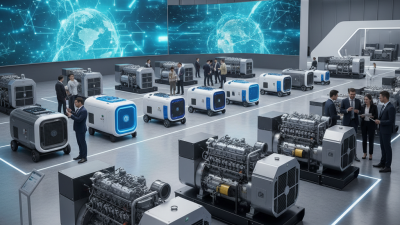
Choosing among China Best Generator Set Manufacturers Suppliers requires more than comparing prices on a product page. A dependable Generator Set must start smoothly, carry its rated load, and remain stable during long operating hours. Buyers should examine engine brands, alternator quality, control systems, fuel consumption, noise levels, and service response. Small details matter. A loose terminal can stop an entire facility.
Cummins power-generation executive Amy Davis has emphasized, “Reliable power is an enabler of progress.” This principle gives the market a useful standard. A supplier should provide verifiable test records, clear warranty terms, and practical installation guidance. Factory experience also matters. Serious manufacturers can explain load-bank testing, temperature-rise results, protection settings, and spare-parts planning without hiding behind vague promises. Their technicians should understand hospitals, construction sites, data centers, farms, and temporary power projects.
However, no supplier ranking is perfect. A large factory may still offer weak communication. A smaller manufacturer may provide excellent engineering but limited overseas support. Buyers should request references, inspect production lines, and confirm certifications with the issuing organizations. Do not trust impressive brochures alone.
Look beyond the first quotation. Ask who will answer after delivery, how quickly parts can ship, and whether remote monitoring is available. Review actual fuel data under partial load, because many sets rarely operate at full capacity. This article will compare leading Chinese manufacturers and suppliers through product reliability, customization, compliance, technical capability, and after-sales support. The goal is practical guidance, not a perfect list. Real projects are messy. Careful verification remains essential.
Types of Generator Sets Manufactured in China
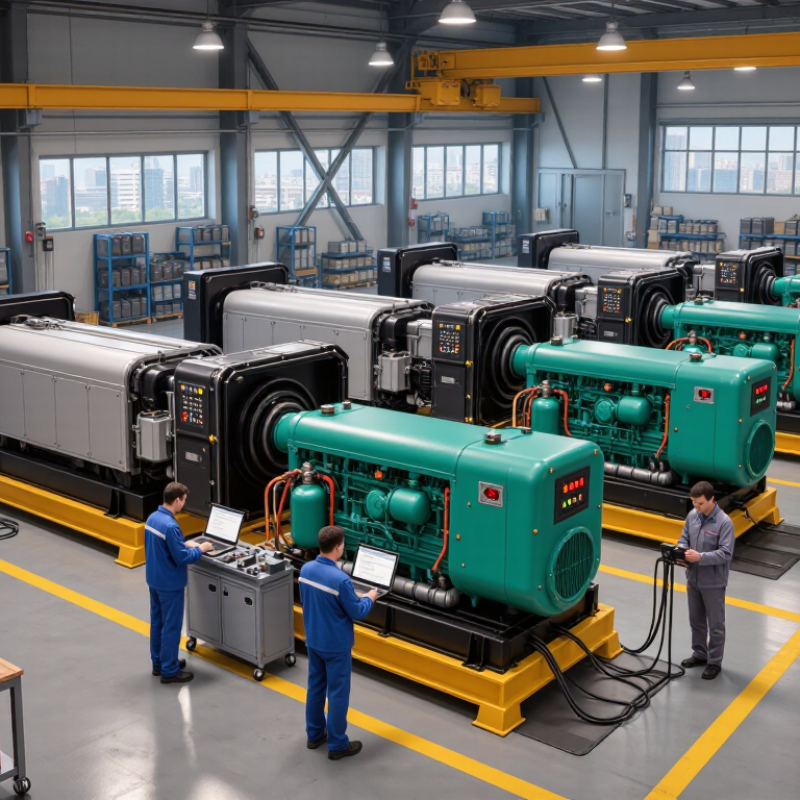
Chinese manufacturers produce several generator set types for different operating conditions. Diesel generator sets remain common in factories, construction sites, hospitals, and backup power rooms. They start reliably under heavy loads and support long running periods. A 500 kVA unit may power pumps, elevators, and essential lighting. Fuel storage and ventilation still require careful planning.
Gas generator sets use natural gas or other approved gaseous fuels. They can reduce local emissions and operate smoothly in urban facilities. Their performance depends on stable gas pressure and suitable pipeline design. Dual-fuel sets add flexibility when fuel availability changes. This sounds convenient. It is not always simpler. Gasoline portable sets suit small tools, emergency lighting, and temporary outdoor work. Trailer-mounted diesel sets serve road repairs, events, and remote construction.
Silent enclosures use steel panels, insulation, and exhaust treatment to reduce noise near offices or residential areas. Marine generator sets need corrosion-resistant materials and stable operation under vessel movement. Each design has limits. When comparing suppliers in China, buyers should check rated power, standby versus prime duty, frequency, voltage, and control functions. Ask for load-bank test records, insulation checks, fuel-consumption data, and clear maintenance schedules. I have found that nameplate power alone can mislead buyers. Starting motors may demand several times their running current. Certification, factory inspection, spare-parts access, and technician response also matter. A careful specification prevents expensive surprises, though no generator set is maintenance-free.
Key Standards for Evaluating Chinese Generator Set Manufacturers
Choosing among China’s best generator set manufacturers requires evidence, not polished catalogs. A practical factory audit should verify ISO 9001 quality procedures, traceable components, and documented corrective actions. Ask for ISO 8528 test records, especially performance classes G2 or G3. These classes show how the set handles voltage and frequency changes under load. Request a witnessed load-bank test at 25%, 50%, 75%, and 100% capacity. Watch the control panel. Check recovery time after a sudden load step. A spreadsheet can still lie.
Reliability matters because standby failures are expensive. The International Energy Agency’s Electricity 2024 report estimates data-center electricity demand could exceed 1,000 TWh by 2026, increasing pressure on backup systems. Uptime Institute’s 2024 Annual Outage Analysis reported that 54% of respondents experienced a serious outage costing over 100,000 US dollars. That figure should change supplier screening. Evaluate fuel consumption, cold-start performance, noise, emissions documentation, and spare-parts availability. Confirm whether the supplier maintains service engineers near the installation site. Ask for references from projects with similar altitude, temperature, and duty cycles. Do not accept only factory photographs. Inspect welding, cable routing, enclosure sealing, and engine identification in person or through an independent auditor. Some evaluations miss battery chargers and transfer-switch compatibility. That is a costly oversight.
Key Standards for Evaluating Chinese Generator Set Manufacturers
This chart shows the publication year of widely recognized standards commonly used when assessing generator set quality, production systems, environmental management, occupational safety, and rotating electrical machines.
Reference standards: ISO 8528-1:2018, ISO 9001:2015, ISO 14001:2015, ISO 45001:2018, and IEC 60034-1:2022. Buyers should verify current certificates, certification scope, testing records, and product compliance directly with each manufacturer.
Steps for Selecting a Reliable Chinese Generator Set Supplier
China Best Generator Set Manufacturers Suppliers?
Selecting a reliable Chinese generator set supplier requires more than comparing prices. The International Energy Agency’s Electricity 2024 report expects data-centre electricity demand to exceed 1,000 TWh by 2026. Backup power must therefore perform under pressure. Request factory audit records, production photos, and recent load-test videos. Check whether the supplier follows ISO 8528 and provides clear ratings for standby, prime, and continuous operation.
Ask for engine, alternator, controller, and fuel-consumption specifications. Confirm the exact test conditions behind every number. A 500 kW rating means little without ambient temperature, power factor, and operating duration. Uptime Institute’s 2023 Global Data Center Survey reported that 60% of outages cost at least $100,000. That figure makes preventive testing commercially important. Require a witnessed factory acceptance test, including cold starting, load steps, voltage stability, and emergency shutdown.
Evaluate service before signing. A dependable supplier should offer spare-parts lists, remote troubleshooting, manuals, and technician response times. Ask for references from projects with similar climate and duty cycles. Visit the assembly line if possible. A polished showroom can still hide weak quality control. I would not accept a low quotation without checking copper content, enclosure thickness, battery capacity, and warranty exclusions. No checklist is perfect. Keep written records, because small omissions often become expensive delays.