Choosing among China’s top 10 Earth Drill manufacturers requires more than comparing catalog prices. Ground conditions, drilling depth, torque, and after-sales support can change the best choice completely. A machine working in soft clay may struggle in compacted gravel or fractured rock. Buyers should examine real production records, not only polished product photos.
Earth Drill specialist Michael R. Hayes explains, “The ground decides more than the brochure.” His observation captures the central challenge behind this review. Reliable manufacturers usually show clear specifications, tested hydraulic systems, replacement-part availability, and practical customer support. Factory experience also matters. A manufacturer with strong export knowledge may understand packaging, documentation, and service expectations across different markets.
This guide compares leading Chinese suppliers through several practical factors. These include product range, drilling performance, material quality, customization, certification, delivery capability, and user feedback. Field experience deserves attention too. A clean test-yard demonstration cannot fully represent a muddy construction site at six in the morning.
No ranking is flawless. Regional soil, carrier compatibility, and project budgets can change the final decision. That limitation matters. Some smaller manufacturers may offer impressive engineering, but provide less public data. Others may have broad production capacity, yet weaker communication after delivery.
The companies discussed here are not presented as identical choices. Each has different strengths, risks, and suitable applications. Readers should verify current specifications, inspect sample machines, and request references before purchasing. A careful comparison can reduce downtime, protect investment, and help match the right Earth Drill to demanding ground conditions.
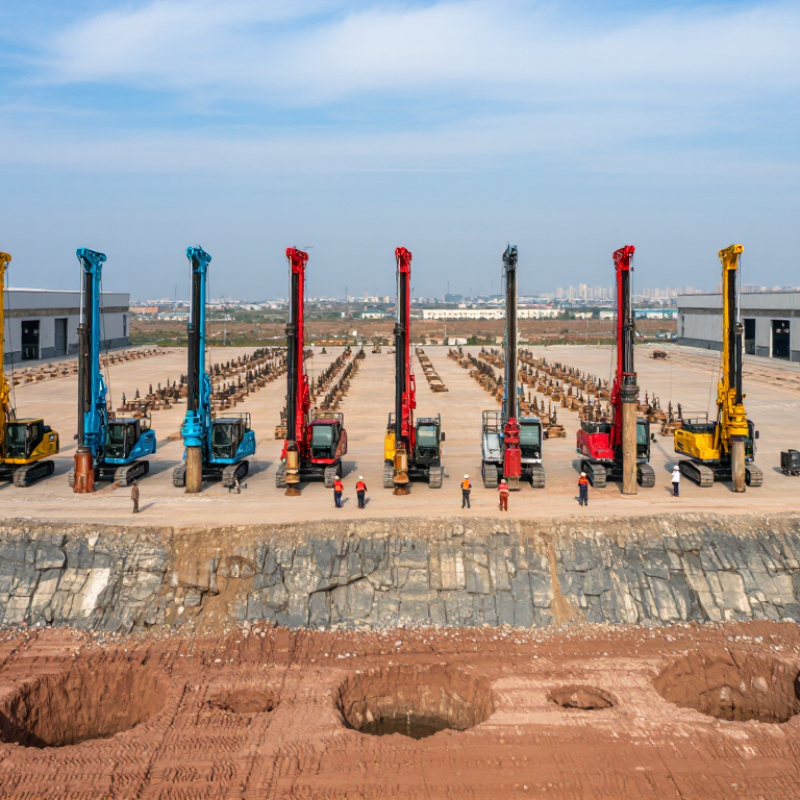
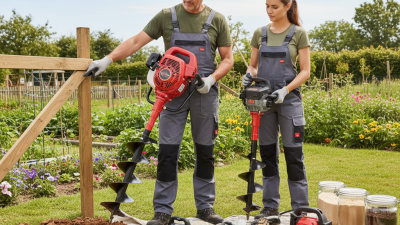
An earth drill is a powered auger that creates round holes in soil. It usually combines a motor, gearbox, drive shaft, and replaceable cutting bit. Depending on the machine, power may come from hydraulics, a tractor’s PTO, or a compact excavator.
Operators use earth drills for fence posts, tree planting, foundation supports, and utility work. The bit rotates while its flights lift soil from the hole. In loose ground, drilling can be quick and clean. Clay is different. It may wrap around the flights and reduce cutting performance. Rocky soil demands stronger teeth and slower pressure.
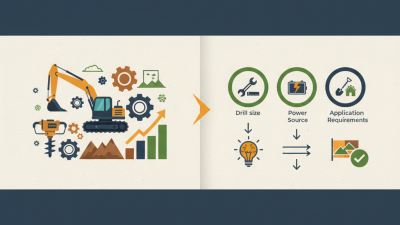
Preparation matters more than many buyers expect. Check the required hole diameter, drilling depth, torque, and machine flow rate before choosing equipment. Mark underground utilities and inspect the work area carefully. Keep bystanders away from the rotating assembly. Never force a stalled bit with sudden hydraulic pressure.
Small details affect results. Sharp teeth improve penetration. A stable boom helps maintain a straight hole. Removing packed soil can prevent overheating and gearbox stress. In practical comparisons of manufacturers, these service details deserve as much attention as headline power. A powerful drill is not always the best choice. I have seen specifications look impressive, yet poor soil matching caused uneven holes and wasted time. That is a useful reminder: performance depends on the complete system, not the attachment alone.
China Top 10 Earth Drill Manufacturers?
A top-ten list can open the search, but it cannot prove manufacturing quality. Evaluate each earth drill manufacturer through factory evidence, not polished product pages. Ask for production photos, material certificates, inspection records, and recent export references. A reliable supplier should explain torque ratings, auger sizes, hydraulic pressure, and compatible excavator weights clearly.
Visit the factory if possible. Watch how shafts are welded, machined, painted, and tested. Check whether critical parts are produced in-house or outsourced. Request a sample drill and measure its shaft runout, tooth fit, gearbox noise, and oil leakage after operation. I have seen attractive samples fail because the mounting plate was too thin. That mistake is easy to miss.
Tips: Compare at least three quotations. Keep specifications identical. Request a written warranty, spare-parts list, delivery schedule, and inspection procedure. Confirm whether testing follows recognized technical standards and whether documents match the actual model. A low price may hide weaker steel or limited after-sales support. Still, price alone is not proof of poor quality. Sometimes a smaller factory offers closer engineering support, but its capacity may be uncertain. Ask for production records and a realistic monthly output before placing a large order.
China’s Top 10 Earth Drill Manufacturers should be assessed through performance, not advertising claims. Key factors include torque, drilling depth, soil adaptability, hydraulic efficiency, spare-parts access, and export service. The China Construction Machinery Industry Association reported 195,018 excavators sold in China during 2023. This figure is not a direct earth-drill count, but it shows the scale of China’s supporting equipment industry. MarketsandMarkets also identifies infrastructure development and foundation work as major drivers of global drilling-equipment demand.
A practical top-ten review should compare test records, factory capacity, certification, and customer feedback. Manufacturers serving rocky soil need stronger gearboxes and replaceable teeth. Urban contractors usually value compact frames, low vibration, and precise control. Energy use matters too. The U.S. Department of Energy notes that drilling productivity depends heavily on ground conditions, tool design, and operating technique. Therefore, a powerful machine can still perform poorly on wet clay or fractured stone. No ranking is perfect. Data may reflect export volume rather than field durability, which deserves closer checking.
Tips: Request torque curves, drilling samples, warranty terms, and parts lead times. Ask for references from projects with similar soil. Inspect welds, hydraulic hoses, and tooth wear before purchase. A lower price may hide slower service or costly downtime. Keep a written comparison sheet, because memory becomes unreliable after ten factory visits.
| Rank | Anonymized Manufacturer Profile | Primary Product Focus | Typical Torque Range | Typical Drill Diameter | Maximum Practical Depth | Drive Options | Common Applications | Export Readiness |
|---|---|---|---|---|---|---|---|---|
| 1 | Profile A — Large-Scale Attachment Specialist | Hydraulic earth augers for excavators and drilling rigs | 4,000–18,000 Nm | 300–1,200 mm | Up to 12 m | Hydraulic | Foundations, piling, utility work | High |
| 2 | Profile B — Compact Equipment Specialist | Augers for mini excavators, skid steers, and loaders | 800–6,000 Nm | 100–600 mm | Up to 6 m | Hydraulic | Fencing, landscaping, agriculture | High |
| 3 | Profile C — Heavy-Duty Drilling Systems Builder | Earth, rock, and replacement-flight auger systems | 6,000–25,000 Nm | 400–1,500 mm | Up to 15 m | Hydraulic and mechanical | Infrastructure, bridges, foundations | High |
| 4 | Profile D — Agricultural and Forestry Equipment Producer | Tractor-mounted and PTO-driven earth augers | 1,000–4,500 Nm | 150–900 mm | Up to 5 m | PTO and hydraulic | Tree planting, vineyards, fencing | Medium–High |
| 5 | Profile E — Utility and Infrastructure Specialist | High-frequency hydraulic augers and extensions | 2,000–10,000 Nm | 200–1,000 mm | Up to 10 m | Hydraulic | Power poles, drainage, utilities | High |
| 6 | Profile F — Custom Engineering Manufacturer | Customized auger heads, shafts, and drilling tools | 1,500–12,000 Nm | 150–1,100 mm | Up to 10 m | Hydraulic and PTO | OEM projects, construction, agriculture | Medium–High |
| 7 | Profile G — Rock and Mixed-Soil Tooling Producer | Rock augers, carbide teeth, and core drilling accessories | 3,000–16,000 Nm | 250–1,000 mm | Up to 12 m | Hydraulic | Hard soil, gravel, weathered rock | Medium–High |
| 8 | Profile H — Mini Excavator Attachment Producer | Lightweight augers and interchangeable pilot bits | 500–3,000 Nm | 100–500 mm | Up to 4 m | Hydraulic | Landscaping, signs, small foundations | High |
| 9 | Profile I — Standardized OEM Supplier | Standard auger assemblies and private-label components | 800–8,000 Nm | 150–800 mm | Up to 8 m | Hydraulic and PTO | Equipment dealers, rental fleets, contractors | High |
| 10 | Profile J — Value-Oriented General Manufacturer | General-purpose earth augers and replacement parts | 500–5,000 Nm | 100–700 mm | Up to 6 m | Hydraulic and PTO | General construction, farming, fencing | Medium |
China’s top ten earth-drill manufacturers are best assessed through products, engineering depth, and field reliability. Their portfolios commonly include hydraulic augers, rotary drilling rigs, rock drills, continuous-flight augers, and foundation drilling systems. These machines serve piling, geothermal wells, quarrying, mining, utility construction, and slope stabilization projects.
Technology separates capable suppliers from ordinary fabricators. Leading producers increasingly use variable-displacement hydraulic motors, planetary gearboxes, torque monitoring, and replaceable carbide teeth. Some systems support remote diagnostics and automatic drilling records. The China Construction Machinery Industry Association reported 195,018 excavators sold in 2023, including 105,038 exported units. That scale supports a broad attachment ecosystem, but sales volume alone proves little. Buyers should inspect torque curves, drilling depth, soil compatibility, spare-part availability, and actual project references.
Research from MarketsandMarkets identifies infrastructure development and foundation work as major drivers of the global drilling equipment market. In practice, a 300-millimeter auger may suit loose soil, while fractured rock demands a heavier planetary drive and specialized tooling. Field tests still matter. Published specifications can be optimistic. A careful comparison should include cycle time, fuel consumption, vibration, tooth wear, and operator feedback. Some manufacturers provide impressive data but limited evidence from frozen ground, dense clay, or mixed rock. That gap deserves attention.
Choosing among China’s top earth drill manufacturers requires more than comparing online rankings. A reliable supplier should show consistent production records, clear technical data, and practical experience with different soil conditions. Ask about torque, drilling diameter, gearbox design, mounting options, and recommended excavator sizes. A supplier that gives vague answers may not understand your project.
Inspect the manufacturer’s quality process. Request material certificates, load test records, and photographs from actual workshops. Check whether critical parts receive proper heat treatment and dimensional inspection. You should also review service procedures, spare-part availability, and response times. Good communication matters when a machine works in hard clay, loose gravel, or frozen ground. Ask for references from contractors using similar equipment. Their feedback often reveals problems that brochures hide.
An experienced manufacturer should help match the drill to your equipment, not simply sell the largest model. Confirm hydraulic flow and pressure before ordering. A mismatch can reduce performance or damage the carrier. Warranty terms must be specific, including coverage periods, excluded parts, and transport responsibilities. Video demonstrations are useful, but they are not enough. Ask for independent test evidence where possible. I would also inspect packaging and documentation before shipment, because small omissions can delay installation. No selection process is perfect. Recheck every assumption before signing.