How to Choose the Right Earth Auger for Your Gardening Needs?
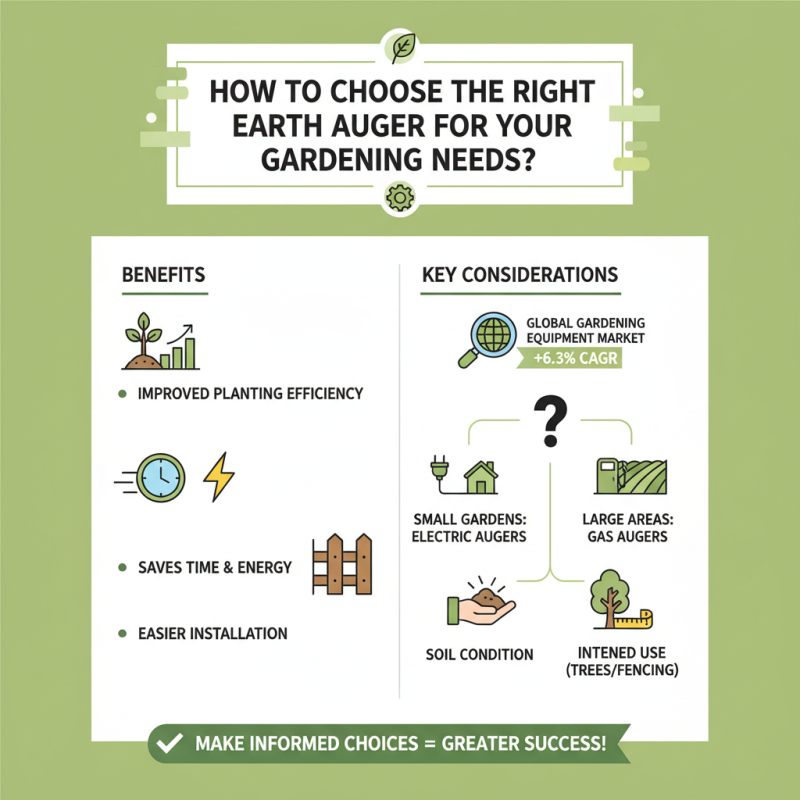
Selecting the appropriate Earth Auger can enhance your gardening experience significantly. With the global gardening equipment market expected to grow at a CAGR of 6.3% through 2026, understanding how to choose your tools is crucial. Earth Augers play a vital role in soil preparation, aiding in planting trees and installing fencing. They save time and energy, making them essential for avid gardeners.
Research indicates that the right Earth Auger can improve planting efficiency by up to 50%. Many gardeners may overlook specific features. Choosing an auger that suits your garden size is important. Some may find themselves unsure between gas or electric models. Electric augers typically work well in small gardens, while gas models are best for larger areas.
However, many gardeners still make errors in selecting the wrong size or type. This can lead to wasted effort and dissatisfaction. They should consider factors like soil condition and intended use. Understanding these aspects leads to greater success in gardening. Making informed choices can ultimately enhance your gardening productivity and enjoyment.
Understanding Earth Augers and Their Purpose in Gardening
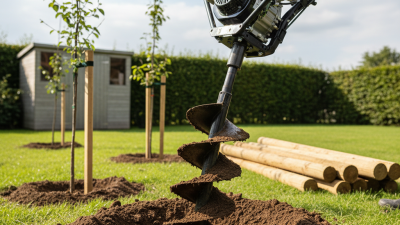
Earth augers are essential tools for gardeners. They help create holes in the ground for planting bulbs, trees, and posts. Understanding their purpose can improve your gardening efficiency. An auger saves time and effort. It makes the job easier, especially for hard or rocky soil.
When choosing an earth auger, consider the size. Smaller augers work well for flower beds. Larger augers suit trees and heavy-duty tasks. The auger’s diameter is important. A wider bit digs larger holes. A narrow one is perfect for small plants.
Tips: Test the auger on a small area first. It helps you get a feel for the tool. Be cautious with depth; you don’t want to damage nearby roots. Also, think about your comfort. Heavy augers require more strength to operate. Always assess your needs carefully before making a choice.
How to Choose the Right Earth Auger for Your Gardening Needs?
| Auger Type |
Diameter |
Best Use |
Weight |
Power Source |
| Manual Auger |
2 inches |
Planting bulbs |
3 lbs |
Manual |
| Post Hole Digger |
6 inches |
Installing fences |
15 lbs |
Gas |
| Electric Auger |
4 inches |
Planting saplings |
10 lbs |
Electric |
| Heavy-Duty Auger |
8 inches |
Large trees |
25 lbs |
Gas |
| Mini Auger |
3 inches |
Small plants |
6 lbs |
Battery |
Types of Earth Augers: Electric vs. Gas Models
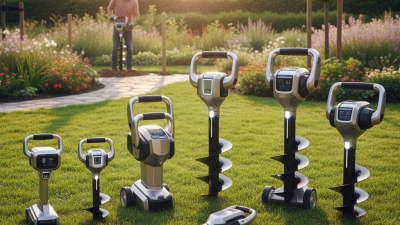
When selecting an earth auger, you face a choice between electric and gas models. Electric augers are known for their ease of use. They are lightweight and ideal for small gardens. Many users appreciate the quiet operation. However, they may lack power for deep or heavy-duty tasks. Consider the battery life, as it may not last for larger areas. If you have limited space and want convenience, electric drills can be a top choice.
On the other hand, gas models offer robust performance. They are suitable for tough soil conditions and larger projects. While gas augers provide more torque, they come with a heavier weight. Handling them requires a bit of strength and skill. Additionally, they tend to be louder, which some find off-putting. Maintenance can be tricky, with periodic checks needed for fuel and oil levels. Assessing your gardening needs is essential. Ask yourself: how often will you use it? Where will you store it?
Comparison of Electric vs. Gas Earth Augers
This chart compares key features of Electric and Gas Earth Augers, including weight, power, noise level, and runtime, helping you make an informed choice for your gardening needs.
Key Factors to Consider When Choosing an Earth Auger
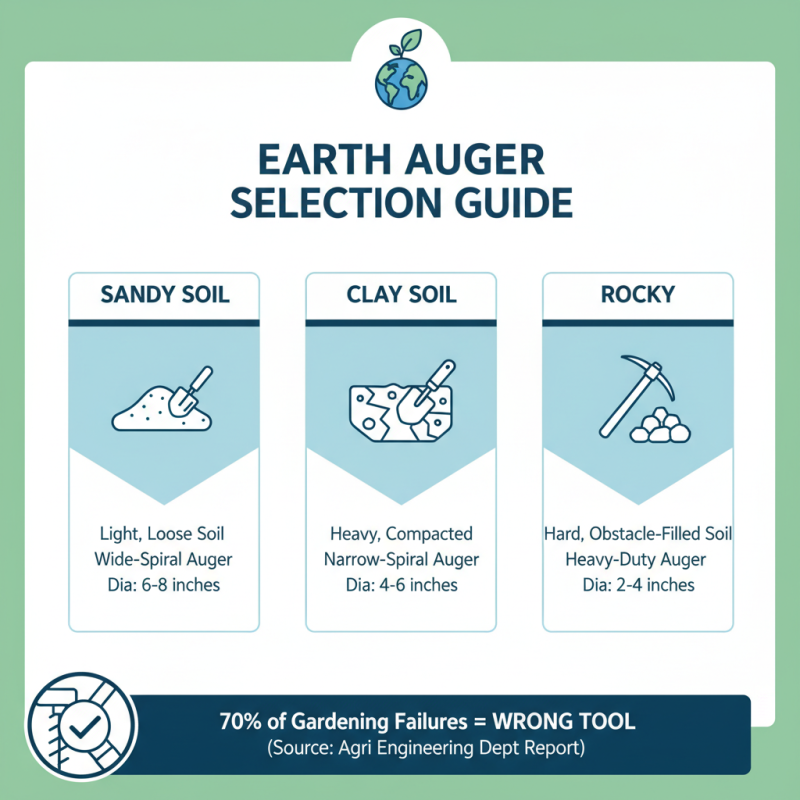
When selecting an earth auger, several factors come into play. The soil type is crucial. Sandy soil requires different auger specifications than clay or rocky soil. According to a report by the Agricultural Engineering Department, nearly 70% of gardening failures stem from improper tool selection based on soil conditions. Thus, understanding your garden’s soil can guide you in choosing the right size and type of auger.
The auger size matters, too. A standard auger ranges from 2 to 12 inches in diameter. For small plants or seedlings, a narrower auger suffices. However, larger plants or trees call for wider augers. In fact, studies show that using an auger too small for the root ball can lead to stunted growth. Yet, using one that's too big may damage surrounding flora.
Lastly, power source varies. Manual augers are budget-friendly but require more energy. Gas and electric models can handle larger projects but come with weight and noise concerns. A lawn care survey indicated that 60% of gardeners preferred electric augers for their ease of use. Still, common complaints include battery life and mobility. Choosing the correct tool remains a nuanced process that requires thoughtful consideration.
Assessing Soil Conditions for Optimal Earth Auger Use
When selecting an earth auger, assessing the soil conditions is vital. Different soil types affect the performance of the auger.
Clay soils are dense and sticky. They can slow down the drilling process significantly.
Sandy soils, on the other hand, are loose. They allow for easier penetration but may cause the hole to collapse if not careful.
Consider the moisture level as well. Wet soil can be softer but also creates a challenging situation. It might become muddy, leading to slippage.
Dry soil may require more force to penetrate. This means you need a stronger auger. Take note of the soil’s texture.
Rocky or compacted soil requires specialized tips. These tips are designed to handle tough conditions.
It’s worth reflecting on your gardening goals too. Are you planting large trees or small plants? The depth and width of the holes will differ based on what you are planting.
This can impact which earth auger will suit your needs best. Sometimes, even experienced gardeners overlook these factors. Taking the time to assess soil conditions helps ensure your efforts lead to successful gardening outcomes.
Safety Tips and Best Practices for Operating an Earth Auger
Operating an earth auger can be an efficient way to dig holes for planting, fencing, or landscaping. However,
safety should always come first. According to industry statistics,
accidents involving power tools contribute to thousands of serious injuries every year. Proper precautions can significantly reduce these risks.
Always wear protective gear, including gloves and safety goggles. It's essential to inspect the auger before use,
ensuring there are no loose components.
Another important safety measure is maintaining a safe distance from others.
The noise and potential flying debris can be hazardous. Make sure children and pets are at least
50 feet away. When starting the machine, ensure you have a firm footing. Many accidents occur due to
improper stance or loss of balance. Familiarize yourself with the controls, and practice with the auger in a controlled environment.
While earth augers are designed for efficiency, improper use can lead to difficulties.
Digging in rocky soil may cause the auger to jam, requiring you to stop and reset. This can be time-consuming and frustrating.
Keeping the auger sharp can help with tough jobs, as well. Regular maintenance is key, yet often overlooked.
Engaging with local gardening communities can also provide invaluable hands-on tips and experiences.