How to Choose the Right Earth Auger for Your Outdoor Projects?
Choosing the right Earth Auger for your outdoor projects can significantly impact their success. According to a recent industry report by IBISWorld, the Earth Auger market has seen a 5% annual growth rate, highlighting its increasing popularity among homeowners and professionals alike. “Selecting the right size and type is crucial for efficiency,” says John Anderson, a renowned expert in outdoor equipment.
Earth Augers vary in size and power, suited for specific tasks. For smaller gardening projects, a compact model will suffice. Larger jobs, such as fence post installations, may require a more robust auger. Using the wrong tool can lead to inefficiency and frustration. Additionally, understanding your soil type is essential. Sandy soil requires different considerations than clay-heavy ground.
Many users underestimate the importance of proper auger selection. Research shows that 45% of users had equipment that wasn’t suitable for their task. This often results in wasted time and resources. Investing in good quality Earth Augers can make a significant difference in your productivity. Always consider the features that align with your specific needs for successful outcomes in your outdoor projects.
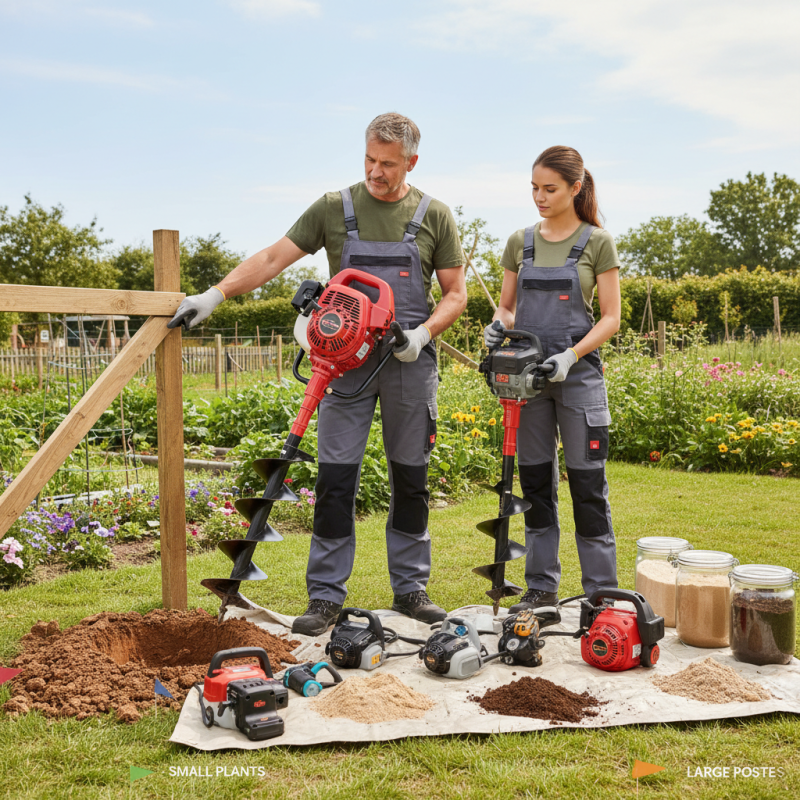
Understanding the Different Types of Earth Augers for Your Needs
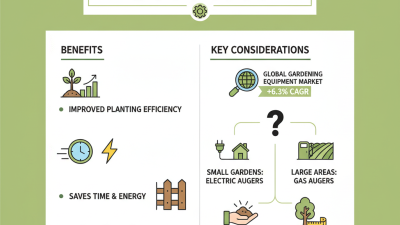
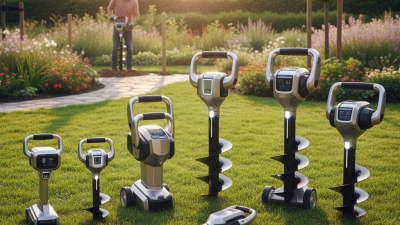
When choosing the right earth auger, it's essential to understand the different types available. Manual augers are simple. They require physical effort but offer good control. For small projects, they can be perfect. Electric augers provide convenience and ease of use. They operate with minimal effort, making them suitable for longer tasks. However, they may lack power in rocky soil.
Gas-powered augers are powerful tools for large-scale jobs. They dig deep holes quickly. They excel in tough conditions, such as compacted earth. But they require maintenance and fuel, which some may find inconvenient. Each type has its pros and cons, making the choice dependent on your specific needs and project scale.
Knowing your project’s requirements is key. Assess the soil type and existing vegetation. For instance, clay soil may require more power, while sandy soils are easier to manage. Reflect on how often you’ll use the auger. If it’s for a one-time project, a manual or electric model might suffice. Investing in a gas-powered auger can be a commitment. Consider your budget as well; it plays a significant role in your decision.
Factors to Consider When Selecting an Earth Auger
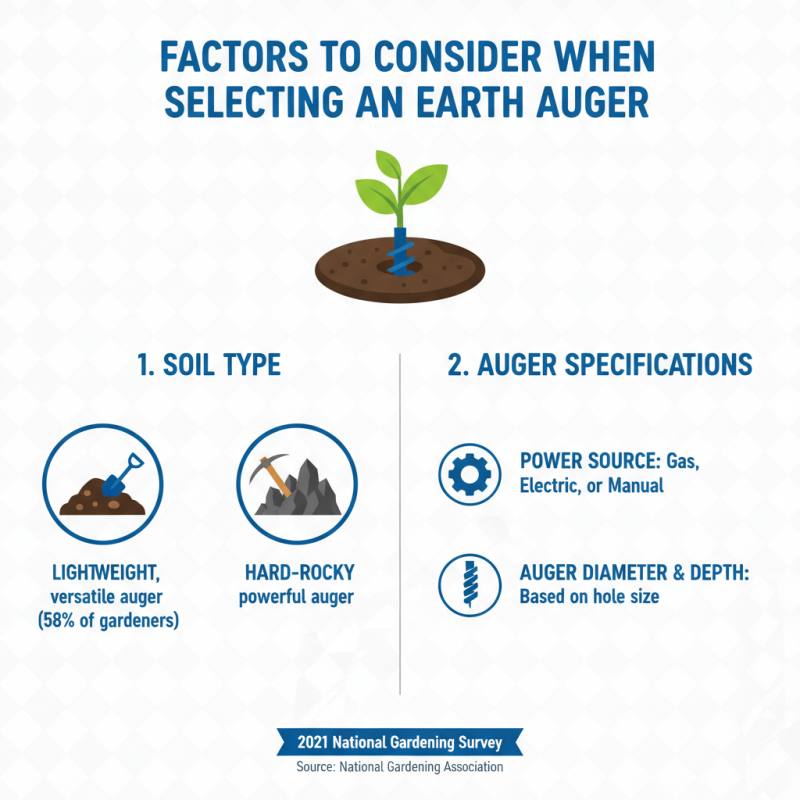
When selecting an earth auger for outdoor tasks, several factors play a crucial role. First, consider the soil type. Soft soil requires different specifications than hard, rocky soil. The 2021 National Gardening Survey indicated that 58% of homeowners prefer gardening in loamy or sandy soil. For such conditions, a lightweight, versatile auger may suffice.
Power source is another key factor. Electric augers are ideal for lighter jobs. Gas-powered models are suited for tough, prolonged tasks, as noted in the 2022 Equipment Performance Report. User feedback suggests that gas models are efficient but heavier, which may lead to fatigue. Often, a balance is needed between power and ease of use.
Depth and diameter of the holes matter significantly. Standard auger sizes range from 2 inches to 12 inches in diameter, with depths up to 48 inches. Knowing your project requirements will guide your choice. However, some users find it challenging to select the size that fits all tasks. Evaluation of past projects can help clarify future needs, ensuring you avoid costly mistakes. Understanding these aspects ensures you choose the right earth auger for your outdoor projects.
Evaluating Engine Power and Performance Specifications
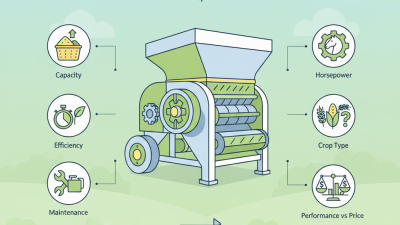
When selecting an earth auger, engine power and performance specifications are crucial. A powerful engine makes a big difference in efficiency. Consider the engine type—two-stroke or four-stroke. Two-stroke engines are lighter and often pack more power. They are great for lighter tasks. However, they create more emissions and noise, which can be a drawback.
Performance specifications also matter. Look for the auger’s torque rating. Higher torque means better drilling capabilities, especially in rocky or compact soil. RPM (revolutions per minute) is another significant factor. A higher RPM typically translates to faster digging. It's vital to match the auger to your specific tasks. If you plan to drill through tough ground, a model with robust specifications is necessary.
It’s essential to remember that too much power can lead to user fatigue and difficulty in control. Always reflect on your comfort and experience level. If you are new to using an auger, starting with a mid-range engine might be best. Evaluate your needs carefully to avoid picking the wrong tool for the job.
Assessing Auger Bit Sizes and Their Applications
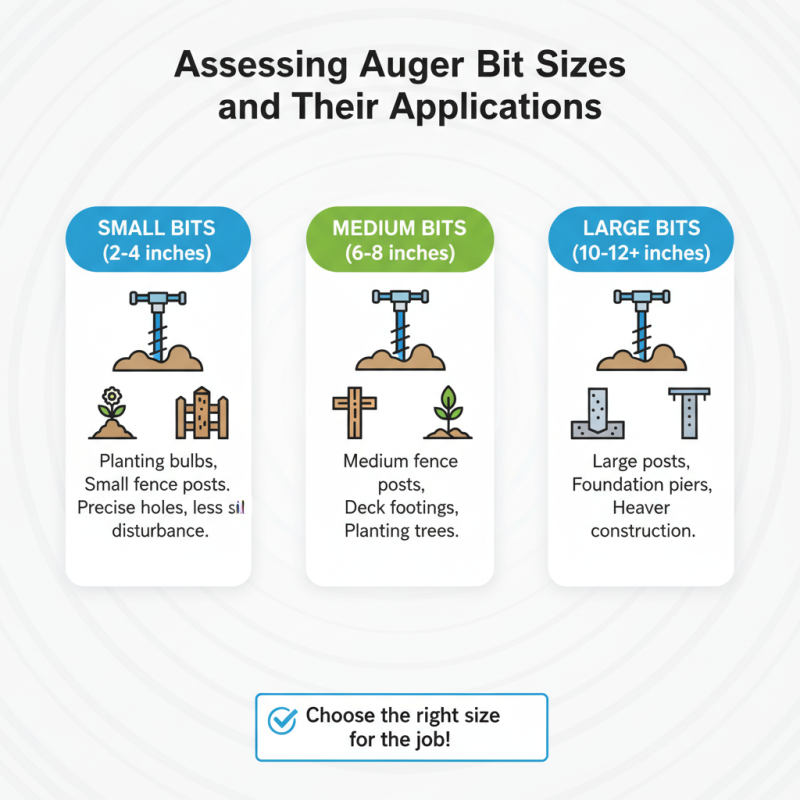
Choosing the right earth auger involves understanding bit sizes and their specific applications. Auger bits come in various diameters, measured in inches. Each size serves a unique purpose. Smaller bits, usually 2-4 inches, work well for planting bulbs and small fence posts. They create precise holes without disturbing too much soil.
Larger bits, ranging from 6-12 inches, are suitable for projects like tree planting or digging deep foundations. A wider hole allows for more significant root systems. It’s essential to consider soil type as well. Sandy soil may require smaller bits. Clay or rocky soil could need a larger size for effective digging.
Understanding the right auger bit for your task can be tricky. Many have made mistakes by choosing bits that were either too small or too large. It’s crucial to assess your project’s needs carefully. Trial and error can happen. However, reflecting on what works best for your circumstances will lead to better outcomes. The right choice will save time and effort in the long run.
Maintenance Tips for Prolonging the Life of Your Earth Auger
Keeping your earth auger in top shape is essential for ongoing outdoor projects. Proper maintenance helps enhance its lifespan and performance.
Regularly inspect your auger after each use. Look for signs of wear and damage, especially on the blades. Dull blades can lead to more effort and less efficiency. If they require sharpening, don't hesitate to do it. This can save you time and frustration in the long run.
Clean your auger after use. Mud and debris can build up and affect performance. A gentle wash with water and a brush can do wonders. Make sure to dry it well to prevent rust. Lubricate moving parts every few months. This reduces friction and keeps the auger performing smoothly.
Store your earth auger properly. Ideally, it should be kept in a dry and cool place. Avoid leaving it outdoors, as moisture can cause damage. A protective cover can keep dust and dirt away. If you notice any issues, address them promptly. Delaying repairs can worsen problems, leading to costly replacements.
How to Choose the Right Earth Auger for Your Outdoor Projects? - Maintenance Tips for Prolonging the Life of Your Earth Auger
| Feature |
Description |
| Power Source |
Gas-powered, electric, or battery-operated options |
| Bit Size |
Common sizes range from 4 inches to 12 inches in diameter |
| Weight |
Lighter models are easier to handle, typically weighing between 20-40 lbs |
| Safety Features |
Includes protective guards, throttle controls, and emergency shut-offs |
| Maintenance Tips |
Regularly clean the auger bits, ensure lubrication, and store properly |
| Usage Depth |
Check vertical reach for specific planting needs, generally 3-4 feet |
| Terrain Compatibility |
Certain models handle rocky or muddy conditions better than others |