What is a Corn Planter and How Does It Work?
The corn planting industry is crucial for global food production and economic stability. A corn planter, essential for efficient seed sowing, plays a pivotal role. As noted by Dr. John Smith, an agronomist with over 20 years of experience, “A reliable corn planter can significantly enhance crop yield.” This emphasis on efficiency is critical, especially in today's fast-paced agricultural landscape.
Recent reports highlight that advanced corn planters can increase planting accuracy by up to 90%. This precision helps farmers maximize their harvest potential while minimizing waste. However, many growers struggle to adopt the latest technologies. The gap between innovation and traditional practices can hinder progress and lead to suboptimal outcomes.
A corn planter's capability to adapt to various soil types and climates remains a challenge. The need for versatility is evident as climate change continues to affect farming conditions. Many planters still lack the necessary features to address changing environments, leading to ineffective planting and reduced yields. Modern technologies, like AI-assisted navigation, could transform this landscape, but their adoption is not universal yet.
What is a Corn Planter?
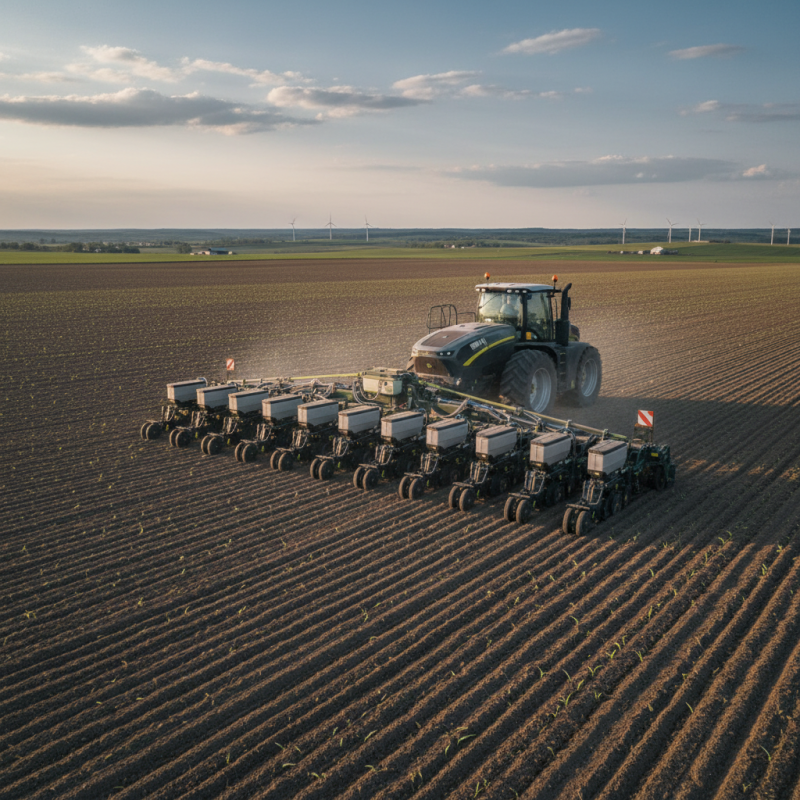
A corn planter is an essential tool in agriculture. It is specifically designed for planting corn seeds efficiently. This machine can significantly enhance planting speed and accuracy compared to manual methods. Corn planters typically feature multiple rows to cover extensive areas in one pass.
The design of a corn planter allows farmers to adjust seed depth and spacing. This ensures optimal growth conditions for each corn plant. Some planters come equipped with fertilizing functionalities. This helps to supply nutrients at the same time as planting. However, using a corn planter requires careful calibration. Incorrect settings can lead to uneven planting, which affects crop yield.
Farmers often learn through experience, refining their techniques over seasons. Keeping track of soil moisture and type is crucial. Neglecting these factors can lead to poor performance. Proper maintenance of the corn planter is also vital. Regular checks can prevent costly breakdowns during peak planting times.
What is a Corn Planter and How Does It Work?
| Feature |
Description |
Function |
Typical Specifications |
| Seed Metering System |
Controls the amount of seed dispensed per row |
Ensures even seed distribution |
Adjustable settings, variable rate options |
| Row Units |
Components that drop seeds into the soil |
Controls seed placement and depth |
Typically 30-inch spacing |
| Frame |
The main structure of the planter |
Supports all components and adds stability |
Varies by model; often made from steel |
| Hoppers |
Containers for holding seeds |
Maintains a sufficient supply of seeds |
Capacity generally ranges from 2-4 bushels |
| Seed Furrow Openers |
Tools that create a trench for the seeds |
Ensures proper depth and soil contact |
Various designs, including disks and chisels |
The History and Evolution of Corn Planters
The corn planter has a rich history that reflects agricultural innovation.
Early corn planting was labor-intensive. Farmers sowed seeds by hand, often in sloped rows, making even spacing difficult.
This inefficient method led to uneven crop growth and varied yields.
In the mid-19th century, mechanical planters began to emerge.
These machines featured simple mechanisms to drop seeds into prepared soil. They reduced labor and increased planting speed.
However, early designs often malfunctioned. Seed distribution was sometimes uneven, leading to patchy fields.
Farmers had to continually adjust these machines for optimal performance.
The evolution continued into the 20th century with advancements in technology.
Modern corn planters now incorporate GPS and precision agriculture methods. These innovations allow for accurate seed placement and increased efficiency.
Yet, even today, challenges exist. Some farmers report that newer machines can be complex to operate.
Training and familiarity are critical for using modern equipment effectively.
Balancing technology with traditional knowledge remains a topic of discussion in many farming communities.
Main Components of a Corn Planter
A corn planter is essential for planting corn efficiently. Understanding its main components helps farmers maximize productivity. The key parts of a corn planter include the frame, seed hoppers, row units, and closing wheels.
The frame supports the entire planter structure. It is often made of heavy-duty steel. This sturdy design allows for stability during planting. Seed hoppers store large quantities of seed. Farmers refill these hoppers regularly. Row units are crucial. They place seeds accurately in the soil at the right depth. Each unit features a disc opener and a seed tube. These components are vital but can sometimes jam, leading to frustrations.
Closing wheels finish the planting process. They cover the seeds back with soil, ensuring proper contact. However, the pressure applied by closing wheels must be monitored. Too much pressure can compact the soil. This may harm seed growth. Regular maintenance of these components is necessary to avoid breakdowns. Farmers often face challenges during planting season, making knowledge of their equipment vital.
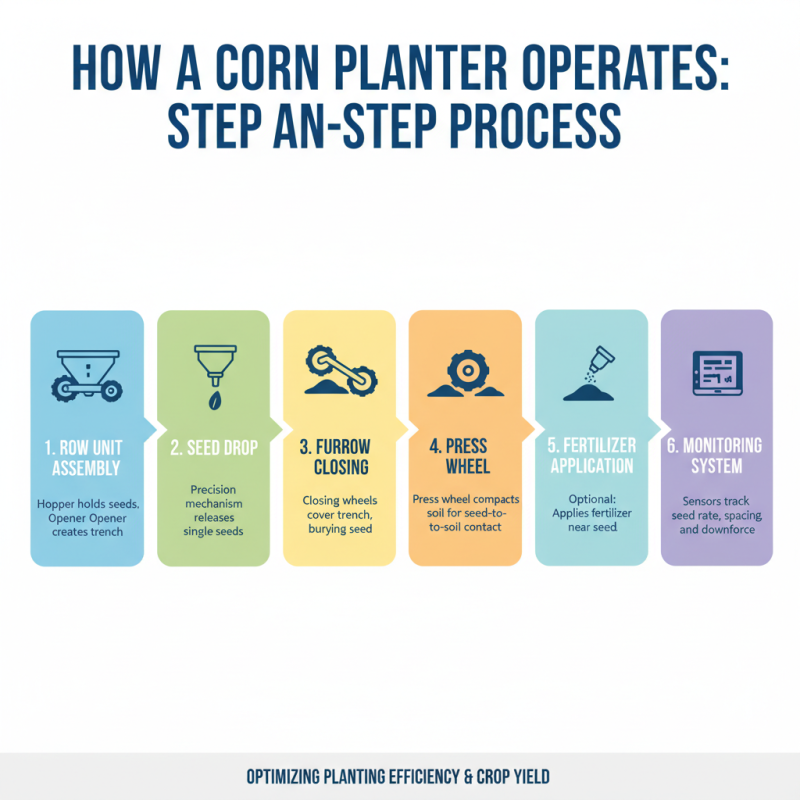
How a Corn Planter Operates: Step-by-Step Process
Corn planters play a crucial role in modern agriculture. They help optimize planting efficiency and crop yield. Understanding how they operate is essential for farmers looking to improve their methods.
The operation begins with seed placement. Corn planters utilize a system of plates or vacuum mechanisms to ensure accurate seed spacing. According to the USDA, ideal spacing enhances corn density, resulting in better yield potential. After seed placement, soil contact is vital. The planter covers the seeds with soil, promoting germination. Using a depth gauge ensures consistent seed placement, which is crucial for growth.
Moreover, planting speed can significantly affect the outcome. A recent report indicated that operating at optimal speeds enhances seed-to-soil contact. However, high speeds may lead to uneven spacing or poor germination. Farmers often need to adjust their techniques based on field conditions. Reflection on these factors is critical for effective planting strategies. Boosting corn yield demands precision and consistent monitoring throughout the planting process.
Benefits of Using a Corn Planter in Modern Agriculture
In modern agriculture, corn planters play a vital role in maximizing corn yield. According to the USDA, improved planting methods can boost corn yields by over 30%. Corn planters ensure seeds are evenly distributed and properly spaced. This precision aids in better crop development and reduces competition for nutrients.
Farmers can save time and labor costs with corn planters. Studies show that using these machines can reduce planting time by 50%. Efficiency in planting allows farmers to focus on other crucial tasks. However, challenges exist. Misalignment and improper calibration can lead to wasted seeds and lower productivity.
Tips: Always check the planter's calibration before use. Regular maintenance is key to preventing breakdowns during peak seasons. Adjustments may be necessary throughout the planting period. Consider using cover crops to enhance soil health. Balancing technology with traditional practices can yield better outcomes.