Choosing the 2026 Best Weeding Wheel for Global Buyers requires more than comparing prices and product photos. A reliable Weeding Wheel should remove young weeds efficiently while protecting crop roots, soil structure, and the operator’s back. Its performance depends on blade design, wheel diameter, handle adjustment, working width, and soil moisture. A narrow wheel may suit closely spaced vegetables, while a wider model can cover open beds faster. Small details matter.
Field experience often reveals what catalogs miss. I have seen lightweight tools perform well in dry, loose soil but struggle after heavy rain. I have also found that sharp blades lose efficiency when maintenance is ignored. That is not a perfect buying story. Buyers should test the wheel in their own soil, especially where clay, stones, or dense weeds are common. User height and daily working time deserve equal attention.
This guide compares practical features for farms, gardens, distributors, and agricultural retailers across different markets. It considers material durability, replacement-part availability, packaging, shipping practicality, and supplier communication. A strong manufacturer should provide clear specifications, consistent quality records, and responsive after-sales support. Independent testing or documented field feedback adds confidence, but neither replaces hands-on evaluation.
Look beyond the lowest quotation. A cheaper Weeding Wheel may create higher costs through bent parts, uncomfortable handling, or unavailable blades. Buyers should confirm measurements, surface treatment, warranty terms, and expected delivery conditions before ordering. Regional farming methods can change the result. The most useful choice is not universally “best”; it is the model that fits the crop, soil, workforce, and maintenance capacity. That distinction deserves careful attention.
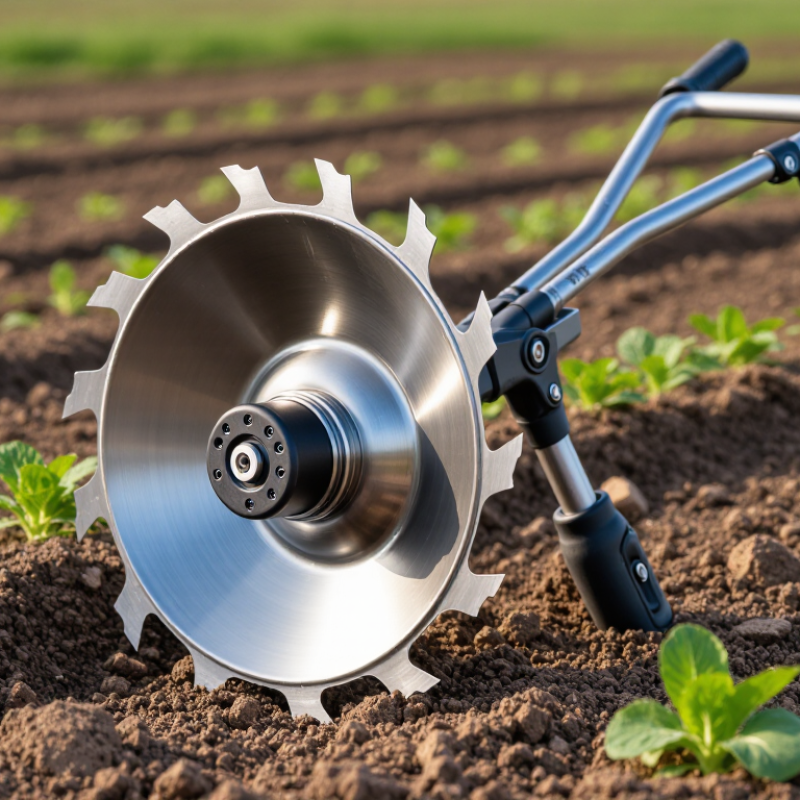
A weeding wheel is a manually pushed tool with one or two wheels and a shallow cutting blade. The operator guides it between crop rows, while the blade slices young weeds below the soil surface. This action disturbs weed roots without turning the entire soil layer. Some models use adjustable handles, interchangeable blades, and row shields for closer work around vegetables.
Timing matters more than speed. A weeding wheel performs best when weeds are small, the soil is slightly dry, and crop rows are clearly visible. In practical field use, the operator must keep the blade centered. A few centimeters of error can damage seedlings. That sounds simple. It is not.
A widely cited analysis by E.-C. Oerke in Crop Protection reported potential global crop losses from weeds at about 34% without control measures. The figure describes biological potential, not losses on every farm, but it shows why timely cultivation matters. FAO’s 2022 report on agricultural automation also emphasizes that farm tools should match local labor, soil, crop spacing, and operating conditions. A weeding wheel fits this principle because it requires little fuel and limited maintenance. However, it is not equally suitable for heavy clay, stony ground, or dense mature weeds. Buyers should check blade width, wheel stability, handle height, spare-part access, and operator comfort. I would also test it on a short row first; catalogue specifications rarely reveal how tiring repeated pushing becomes.
The best weeding wheel in 2026 should match soil, crop spacing, and operator strength. A universal winner does not exist. The FAO’s 2022 report on agricultural automation stresses appropriate scale, safety, and reduced physical strain for small farms. Those principles matter when comparing hand-pushed tools.
Look for an adjustable blade, a stable wheel, and a handle that keeps the back reasonably straight. A narrow blade should pass between young vegetable rows without cutting roots. Wider blades suit open beds and dry, crusted soil. Carbon steel offers strong cutting performance, while corrosion-resistant coatings help in humid regions. Replaceable blades also reduce long-term waste and repair delays. Wheel diameter matters. A larger wheel rolls more smoothly over clods, but it can feel less agile in tight rows. That trade-off is often overlooked.
Tips: Test the wheel on packed soil before ordering large quantities. Check spare-part availability, handle height, package weight, and local service options. The FAO also notes that technology adoption depends on affordability, skills, and local conditions. A low-cost tool may become expensive if its blade bends after one season. It happens. Buyers should inspect welds, axle movement, grip comfort, and cutting depth during a short field trial. Product descriptions rarely show how the wheel behaves beside stones or wet weeds. That is where careful judgment still matters.
Key feature priorities for evaluating a high-performance weeding wheel in 2026.
The benchmark uses a 100-point evaluation model. Weed-removal effectiveness and durability receive the highest weights because they directly influence field productivity, service life, and total operating cost. Compatibility, safety, adjustability, and maintenance support global purchasing decisions.
For global buyers, the best weeding wheel depends on crop spacing, soil moisture, and operator control. A narrow blade suits onions, carrots, and lettuce rows. A wider wheel can cover maize or wider vegetable beds faster. USDA NRCS soil guidance emphasizes texture, drainage, and aggregate stability during field decisions. Sandy soil usually needs shallow cultivation, because weeds uproot easily and crop roots may sit near the surface. Clay soil needs better timing. Work it when friable, not sticky.
Field experience matters here. Finger-style wheels can disturb weeds close to plants, but excessive pressure may injure tender stems. Sweeping blades work well between rows, though they may bury weeds instead of cutting them in dry, crusted ground. FAO and ITPS reported that about 33% of global soils were moderately or highly degraded. That makes soil disturbance worth measuring, not guessing. A perfect wheel remains a myth. I would test two passes before buying in volume.
Tips: Match wheel width to row spacing, then check adjustment range. Keep working depth shallow, often around 1–3 centimeters for young crops. Test after irrigation or rainfall, when weeds are small and soil crumbles. Record speed, missed weeds, and damaged plants. My own comparison would include operator fatigue, not only hectares per hour. A wheel that looks efficient may become difficult after three hours.
Practical comparison of common weeding-wheel configurations for vegetable, cereal, and row-crop production
| Crop / Use Case | Typical Row Spacing | Soil and Weed Conditions | Recommended Wheel Configuration | Typical Wheel Diameter | Working Width per Row | Starting Working Depth | Recommended Field Speed | Main Advantage | Important Adjustment |
|---|---|---|---|---|---|---|---|---|---|
| Sweet Corn | 75–90 cm (30–36 in) |
Loam to sandy loam; annual weeds smaller than 3–5 cm | Rigid or finger-style wheels for between-row cultivation; protective shields near young plants | 35–50 cm (14–20 in) |
15–30 cm (6–12 in) |
2–5 cm (0.8–2 in) |
4–8 km/h (2.5–5 mph) |
Good balance between weed removal and crop protection | Set wheel spacing carefully as stems grow; avoid burying small plants |
| Soybean | 38–76 cm (15–30 in) |
Well-drained loam; weeds controlled before canopy closure | Finger or torsion-style wheels with shallow, aggressive contact between rows | 40–50 cm (16–20 in) |
10–25 cm (4–10 in) |
2–4 cm (0.8–1.6 in) |
5–10 km/h (3–6 mph) |
Effective on small weeds while reducing soil disturbance | Use higher clearance and gentler settings as soybean plants become taller |
| Sugar Beet | 45–50 cm (18–20 in) |
Fine seedbed; crusting and small broadleaf weeds may occur | Narrow, precision-adjustable wheel pair with crop shields | 30–40 cm (12–16 in) |
8–18 cm (3–7 in) |
1–3 cm (0.4–1.2 in) |
3–6 km/h (2–4 mph) |
Precise shallow cultivation close to the crop row | Keep depth uniform; excessive pressure can damage shallow roots |
| Onion | 20–40 cm (8–16 in) |
Light, friable soil; delicate plants and narrow rows | Small-diameter flexible finger wheels or light rotary wheels | 25–35 cm (10–14 in) |
5–15 cm (2–6 in) |
1–2.5 cm (0.4–1 in) |
2–4 km/h (1.2–2.5 mph) |
Low soil throw and gentle treatment around fragile seedlings | Use low down-pressure and verify plant clearance at several growth stages |
| Lettuce and Leafy Greens | 25–45 cm (10–18 in) |
Loam or raised beds; frequent shallow weed emergence | Compact, narrow wheel assembly with depth wheels and adjustable guards | 25–40 cm (10–16 in) |
5–20 cm (2–8 in) |
1–3 cm (0.4–1.2 in) |
2–5 km/h (1.2–3 mph) |
Suitable for repeated passes in high-value vegetable beds | Match wheel width to bed layout and avoid contact with marketable leaves |
| Potato | 75–90 cm (30–36 in) |
Ridged soil; weeds may grow on ridge shoulders | Sturdy rotary wheels or ridge-compatible hoe-wheel combination | 40–55 cm (16–22 in) |
15–35 cm (6–14 in) |
3–6 cm (1.2–2.4 in) |
4–8 km/h (2.5–5 mph) |
Handles moderate soil volume and can work ridge shoulders | Maintain ridge shape and protect developing tubers from exposure |
| Wheat and Barley Inter-Row Use | 12–25 cm (5–10 in) |
Light to medium soil; use only where row structure is established | Very narrow, low-disturbance wheel or inter-row brush-style configuration | 25–40 cm (10–16 in) |
3–8 cm (1–3 in) |
1–2 cm (0.4–0.8 in) |
4–7 km/h (2.5–4.5 mph) |
Can disturb small weeds without heavily moving soil | Requires accurate guidance and uniform crop rows; not suitable for random stands |
| Heavy Clay Soil | Usually 45–90 cm (18–36 in) |
Wet or plastic soil; high risk of smearing and wheel clogging | Large open-profile wheels with strong frames and anti-clogging clearance | 45–60 cm (18–24 in) |
15–35 cm (6–14 in) |
2–4 cm (0.8–1.6 in) |
3–6 km/h (2–4 mph) |
Higher clearance reduces soil packing inside the wheel | Operate near suitable soil moisture; avoid cultivation when clay is sticky |
| Dry, Crusted Soil | Usually 45–90 cm (18–36 in) |
Dry surface crust; small annual weeds and shallow-rooted weeds | Rigid star or toothed wheels with sufficient strength to break the surface crust | 40–55 cm (16–22 in) |
12–30 cm (5–12 in) |
2–5 cm (0.8–2 in) |
4–8 km/h (2.5–5 mph) |
Breaks shallow crust while uprooting newly emerged weeds | Prevent excessive dust and avoid deep operation that increases moisture loss |
Comparison basis: The operating ranges above are practical starting points for field adjustment. Actual performance depends on crop growth stage, row accuracy, soil moisture, weed size, tractor or implement stability, and local field conditions.
2026 Best Weeding Wheel for Global Buyers?
A safe weeding wheel begins with a careful inspection. Check the wheel, axle, frame, handles, and fasteners before every use. Look for cracks, loose parts, worn bearings, or blocked guards. Wear fitted gloves, safety glasses, strong footwear, and close-fitting work clothes. Keep bystanders away, especially children and animals. Operate on stable ground, and avoid hidden stones, wet slopes, and unstable soil. Local operating rules may differ, so buyers should review the user manual and applicable workplace requirements. Never remove a protective guard to improve access.
Maintenance should follow a written schedule, even for simple hand-operated equipment. Clean soil from moving parts after use. Dry the frame before storage to reduce corrosion. Lubricate approved points, but keep oil away from walking surfaces and cutting areas. Inspect wheel alignment and handle height regularly. A damaged wheel can steer unpredictably. Stop immediately when unusual vibration, noise, or resistance appears. Do not repair structural parts without suitable tools and technical knowledge. My practical view is that speed is often overvalued; steady control produces better results. Still, no routine is perfect. Soil conditions change quickly, and operators can miss small defects.
Tips: Test the wheel in a clear area. Use slow, even passes. Mark buried irrigation lines before work. Carry basic tools, spare fasteners, and clean water. Record inspections, repairs, and operator training. Recheck the equipment after the first hour, because early loosening can occur.
Choosing a reliable weeding wheel supplier requires more than comparing catalogue prices. The OECD-FAO Agricultural Outlook 2024-2033 projects global agricultural production to grow about 1.1% annually. That pressure makes simple, repairable field tools increasingly valuable. Yet, one model cannot suit every soil. I would test the wheel in dry loam, damp clay, and uneven beds before approving a large order. Look for an adjustable handle, replaceable blades, corrosion-resistant fasteners, and a stable wheel hub. A 20–30 cm wheel often balances control and working speed, but local conditions matter more than a neat specification.
Supplier evidence matters just as much. Request material certificates, dimensional drawings, inspection records, and a sample from normal production. Ask how quickly spare blades and handles can be shipped. The World Bank’s Logistics Performance Index 2023 assessed 139 economies across customs, infrastructure, and delivery reliability. Those factors directly affect seasonal tool availability. A supplier should explain packaging, lead times, defect handling, and traceability without vague promises. Check whether the quoted price includes testing and replacement parts. It often does not. My own caution is simple: a polished sample may hide inconsistent batch quality. Compare at least three production units, record field performance, and reconsider the model if operators report wrist strain or frequent soil clogging.