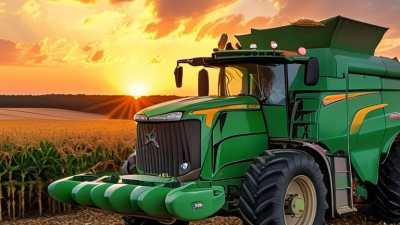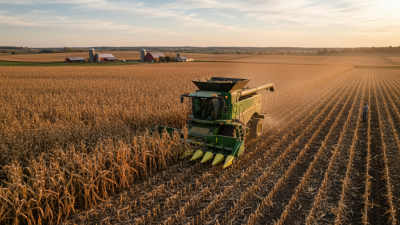
Choosing a Corn Harvester is not just a horsepower decision. It is a field-fit decision. Buyers must compare crop type, acreage, terrain, labor availability, transport needs, and service support. A compact plot may favor a smaller machine with lower operating costs. A large commercial farm may need higher capacity, wider headers, and dependable parts access. Details matter.
Iowa State agricultural engineer Mark Hanna has written about farm machinery selection and operation. A practical takeaway from that guidance is: “Match machine capacity to the field, crop, and available labor.” This is a paraphrased buying principle, not a verbatim quotation. It points to a common mistake: purchasing for peak capacity while overlooking turning space, unloading time, or maintenance access. Those oversights can slow harvest.
This guide compares major 2026 Corn Harvester types, including self-propelled combines, pull-type units, and specialized machines. It examines cutting performance, grain handling, operating costs, and suitability for different farm sizes. Buyers will also see where specifications can mislead. A larger header does not always mean faster work if fields are uneven or grain carts are scarce. Ask local dealers about parts stock, technician response, and support during harvest. Check crop losses under real field conditions, not only brochure claims. No single machine fits every farm. The best choice depends on the work it must do, season after season.
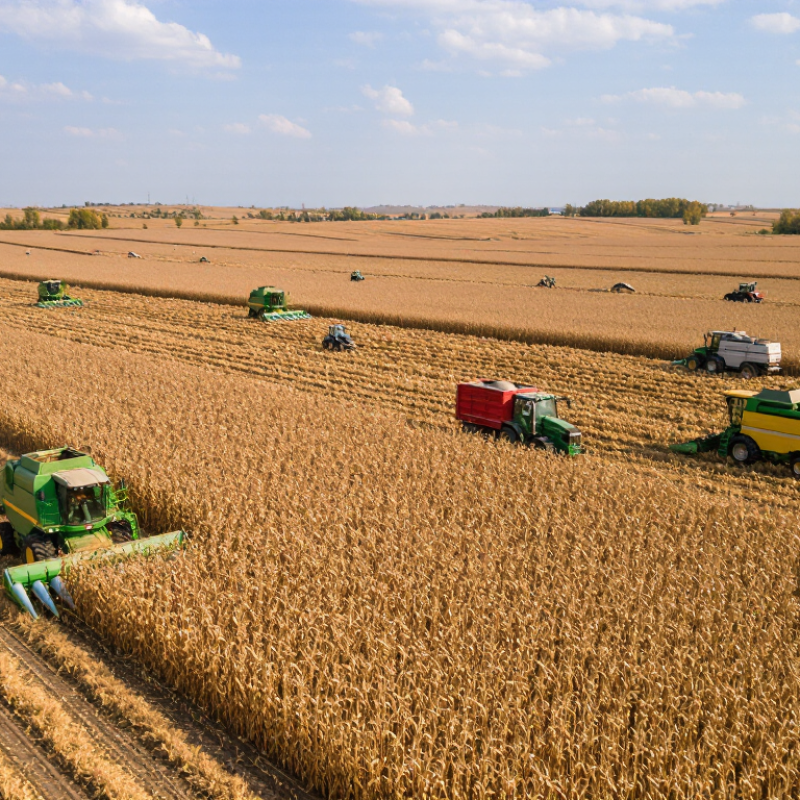
A corn harvester is a machine designed to collect mature corn efficiently in the field. It may operate as a corn picker, combine harvester, or forage harvester. Each type handles the crop differently. A picker removes ears from stalks, while a combine separates kernels from cobs and husks.
The process begins when the header guides stalks between narrow rows. Snapping rolls pull the stalks downward and detach the ears. Conveyors then move the ears into the processing area. In a combine, a threshing cylinder separates kernels from cobs. Sieves and airflow remove husks, leaves, and lighter debris. Clean grain enters a storage tank, while plant residue returns to the field.
Small details affect performance. Dry ears usually flow smoothly, but wet husks can block channels quickly. Proper header height reduces soil contact and grain loss. Operators should also check cutting edges, belts, sensors, and unloading systems before entering the field. Field experience shows that speed alone does not improve output. A slower pass may protect kernels and reduce losses.
No machine performs perfectly. I have learned that settings often need adjustment between fields, even on the same day. Soil texture, crop maturity, row spacing, and moisture can change harvesting results. Buyers should study local conditions, maintenance access, fuel use, and operator training before choosing a harvester. A larger machine is not always the better tool.
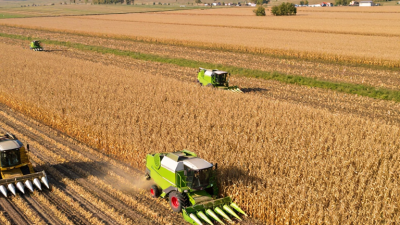
In 2026, self-propelled combine harvesters with specialized corn headers are likely to lead the market. They offer high daily output during short harvesting windows. Adjustable header spacing helps reduce ear loss in uneven fields. Operators can also monitor grain moisture from the cab. This matters when weather changes overnight.
Compact pull-type corn harvesters will remain important for small and medium-sized farms. Their lower purchase cost can protect cash flow. They also fit older tractors already available on many farms. However, field capacity is limited. Wet soil can make transport and turning difficult. That weakness may be underestimated.
Modular harvesters may gain attention where farms need flexible equipment. A machine that changes between corn, grain, and forage can improve annual utilization. Precision guidance, yield mapping, and automatic height control will strengthen demand. Yet technology alone cannot repair poor maintenance or weak operator training. In practical evaluations, clean separation, low kernel damage, and simple service access deserve equal weight. Not every farm needs the largest machine. A smaller unit may perform better on narrow headlands and fragmented fields. Battery-assisted systems could appear in limited applications, but charging time and field endurance remain uncertain. Buyers should compare local crop area, field distance, labor skills, and dealer support before choosing a harvester type.
2026 Top Corn Harvester Types: Which Is Best for Buyers?
The right corn harvester depends on field size, labor access, and tractor capacity. USDA NASS reported 82.7 million harvested corn acres in the United States during 2024. That scale rewards machines that protect daily output. Self-propelled harvesters combine the engine, cab, header, and processing system. They usually deliver faster unloading, better operator visibility, and stronger performance across large fields. However, purchase costs, maintenance, and operator training can be substantial.
Tractor-mounted models use an existing tractor’s power take-off, hydraulics, and lift system. They suit medium farms seeking one power unit for several tasks. Setup can be simpler, but tractor horsepower and hydraulic flow limit performance. Pull-type harvesters normally require less investment and can fit smaller operations. They also offer easier seasonal storage. Yet, turning at headlands takes more space, and field capacity may fall when crop moisture or residue increases.
USDA Crop Production reports show how valuable timely harvesting remains when yields approach record levels. A practical buyer should compare tons per hour, fuel use, labor hours, and repair access. Ask operators who have faced wet soil and uneven rows. Their answers may differ from sales sheets. A clean spreadsheet can mislead. My assessment is imperfect: local terrain and service support can outweigh published capacity. Self-propelled equipment suits scale, while tractor-mounted and pull-type units may protect cash flow.
Estimated field-capacity ranges by harvester type
These indicative planning ranges are not guaranteed machine specifications. Actual capacity varies with header width, crop and field conditions, operating speed, and operator experience. Tractor-mounted and pull-type models can suit smaller operations and existing tractors, while self-propelled machines generally offer higher capacity for larger acreages.
2026 Top Corn Harvester Types: Which Is Best for Buyers?
What Features Should Buyers Compare Before Choosing a Harvester?
Choosing a corn harvester should begin with field conditions, not advertising claims. Compare header width, row spacing, and harvesting speed with your actual acreage. A wider header can improve output, but it may waste fuel in small or irregular fields. Check whether the header adjusts easily for different row layouts.
Grain loss deserves careful attention. Examine the shelling system, cleaning capacity, and adjustment range for changing crop moisture. Corn harvested too wet may increase fuel use and drying costs. Corn harvested too dry may suffer more kernel damage. Ask for verified loss measurements, not only estimated capacity figures. Small losses become expensive across hundreds of hectares.
Operator visibility, cabin comfort, and control simplicity also affect daily performance. Clear views around the header can reduce mistakes near field edges. Useful displays should show engine load, grain loss, moisture, and machine alerts. Maintenance access matters too. Daily checks should not require awkward tools or excessive downtime. A powerful machine is not automatically the best choice. This is easy to forget.
Compare fuel consumption under similar workloads, tire or track performance, turning radius, and transport width. Review service response, spare-part availability, warranty terms, and operator training before signing a purchase agreement. Demonstration results can be helpful, but one field test may not represent every soil type or harvest season. Leave room for doubt.
| Harvester Type | Primary Harvest Output | Typical Operating Width or Capacity | Typical Field Productivity | Best Farm Situation | Main Strengths | Important Limitations | Features Buyers Should Compare |
|---|---|---|---|---|---|---|---|
| Combine Harvester with Corn Header | Dry or wet shelled corn grain | Approximately 4.5–12 m header width; grain tanks commonly about 8–20 m³ | Typically about 20–60 t of grain per hour under favorable field conditions | Medium and large grain farms harvesting substantial acreage |
Best all-round grain option Harvests, threshes, separates, cleans, and stores grain in one pass. Compatible with corn headers that process several rows simultaneously. |
High purchase and maintenance cost. Requires correct rotor, concave, sieve, and fan settings to limit grain damage and loss. Usually needs a separate grain-cart or truck logistics system. | Header row spacing and width; rotor or cylinder design; grain-tank size; unloading rate; kernel damage; cleaning performance; fuel use; service access; automatic adjustment functions. |
| Self-Propelled Forage Harvester | Chopped whole-plant corn for silage | Approximately 3–9 m cutting or pickup width; common theoretical chop capacity is about 50–200 t of fresh crop per hour | Often about 30–150 t of fresh silage per hour, depending on yield, moisture, transport, and crop flow | Dairy, livestock, and contract operations producing large volumes of silage |
Highest silage throughput Produces uniform chop length and can process whole plants efficiently at the correct dry-matter level. |
Does not produce clean shelled grain for storage. Requires a coordinated fleet of trailers or trucks and a properly managed silage clamp, bunker, or silo. | Engine power; header type; theoretical throughput; adjustable chop length; kernel processor design; metal detection; fuel consumption; operator visibility; discharge-throw distance. |
| Pull-Type Corn Picker-Sheller | Usually shelled grain; some models can harvest ear corn | Commonly 2–6 rows, with row spacing matched to the crop | Approximately 2–10 t of grain per hour, depending on row count, yield, and field conditions | Small and medium farms seeking lower capital cost | Lower investment than a self-propelled combine. Straightforward construction, moderate power requirement, and practical for smaller fields. | Requires a suitable tractor and separate grain handling. Lower capacity and slower road or field maneuverability than self-propelled equipment. More exposed crop losses may occur in lodged or weedy corn. | Tractor horsepower requirement; number of rows; row-spacing compatibility; shelling quality; gathering-chain durability; adjustment range; PTO or hydraulic requirements; repair simplicity. |
| Mounted or Three-Point Corn Picker | Ear corn, with optional shelling depending on configuration | Commonly 1–2 rows; some configurations handle more rows | Approximately 1–5 t of ear corn per hour | Small farms, diversified farms, and operations storing ear corn | Compact and relatively affordable. Good maneuverability in small or irregular fields and easy attachment to an appropriately sized tractor. | Limited capacity and operator comfort. Ear-corn handling normally requires additional drying, shelling, or storage equipment. Performance falls in lodged or excessively wet crops. | Tractor lift capacity; row spacing; picking-unit design; ear loss; husk removal; hydraulic requirements; turning clearance; ease of attaching and detaching. |
| Corn Header for a Combine | Front-end harvesting of corn ears and stalks for a combine | Commonly 6–18 rows; fixed, folding, or flexing frames are available | Productivity depends mainly on the combine, crop yield, and travel speed | Buyers already owning a compatible combine and replacing or upgrading the header | Can improve gathering efficiency, reduce stalk intake, and match the header to different row spacings. Folding designs reduce transport width. | Not a complete harvester by itself. Poorly matched row spacing or incorrect deck-plate adjustment can increase ear and kernel losses. | Row spacing; header width; deck-plate adjustment; gathering-chain speed; stalk-roll design; residue processing; folding mechanism; compatibility with combine controls. |
| Small Plot or Single-Row Corn Harvester | Fresh ears, shelled grain, or small quantities of forage | Usually 1 row; compact working widths commonly below 2 m | Approximately 0.3–2 t per hour, depending on crop form and handling method | Research plots, market gardens, smallholders, and specialty production | Low operating width, simple transport, and good access to small or fragmented fields. Lower power demand and easier storage. | Low output and more manual handling. Not economical for large acreage or narrow harvest windows. | Row spacing range; power source; collection-bin size; cleaning or shelling method; operator ergonomics; transport dimensions; availability of replacement parts. |
Buyer priority guide: choose a combine with a corn header for shelled grain at medium or large scale; choose a self-propelled forage harvester for whole-plant silage; choose a pull-type, mounted, or single-row machine when acreage, budget, and field size favor simpler equipment.
Choosing the best corn harvester in 2026 depends on acreage, field conditions, crop moisture, and available capital. A large self-propelled combine suits commercial farms harvesting hundreds of hectares quickly. Its wider header reduces field passes, but fuel, repairs, and depreciation can be substantial. For smaller farms, a pull-type harvester or compact combine may offer better control over ownership costs. It can move more slowly. That is not always a weakness.
The USDA’s 2024 Crop Production report recorded over 14 billion bushels of United States corn production, showing the scale of modern harvesting demand. However, national output does not determine every buying decision. The USDA Agricultural Resource Management Survey also shows that farm structure varies sharply by operation size. Buyers should match machine capacity to actual annual hectares, not optimistic expansion plans. A 12-row header may be wasteful on scattered fields with narrow lanes. A four-row machine may struggle during a short, wet harvest window.
Crop conditions matter just as much. In high-moisture corn, strong cleaning systems and adjustable threshing settings help reduce grain damage. In dry regions, dust protection and cooling capacity deserve close inspection. FAO agricultural outlook data continues to identify maize as a major global cereal crop, reinforcing the need for reliable seasonal performance. Still, reports cannot replace a field trial. Ask for local fuel-use records, repair histories, and grain-loss measurements. I would also budget for unexpected downtime; my earlier estimates often looked too neat. The cheapest purchase can become expensive when harvest timing slips.