Leave Your Message

What Are the Best Weeding Wheel Types in 2026?

In 2026, choosing a Weeding Wheel is less about buying the most powerful tool and more about matching its action to the crop, soil, and row spacing. A wheel that clears weeds between sturdy plants may damage tender seedlings. Dry, crumbly soil behaves differently from damp ground after rain. Those details matter in real beds, not just product descriptions.

Market gardener Eliot Coleman has long emphasized careful, timely cultivation. A fair paraphrase of his practical message is: match the tool to the crop’s stage and the field’s conditions. That principle helps explain the differences between star wheels, finger weeders, basket wheels, and standard wheel hoes. Star wheels can disturb shallow weeds near established crops. Finger units reach closer to plants, but need accurate adjustment. Basket wheels move quickly through open rows, though they may leave weeds near crop stems. No wheel wins everywhere.

This guide compares the leading types by weed control, crop safety, soil conditions, and ease of adjustment. It also considers handle comfort, wheel width, and how much setup each design needs. Small differences show up fast: a narrow wheel may fit a crowded bed, while a heavier unit can feel tiring across long rows. There is no perfect choice. A tool can look efficient in a catalog and still disappoint in a rough, uneven bed. The best pick is the one that suits your crops and the way you actually work.
What Are the Best Weeding Wheel Types in 2026?

Classify Weeding Wheels by Action: Star, Cage, Finger, and Rotary

What Are the Best Weeding Wheel Types in 2026?

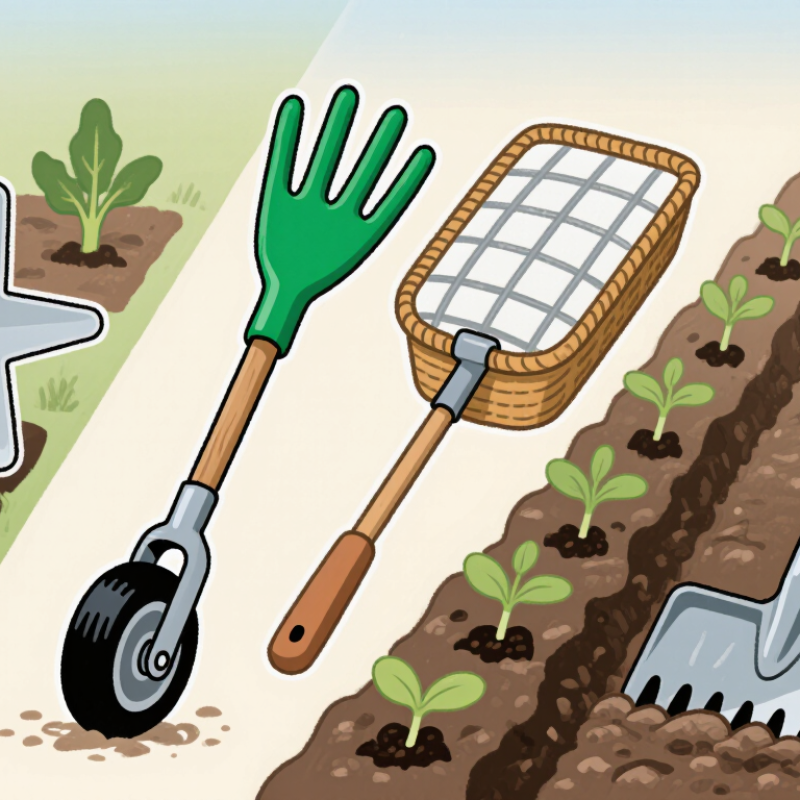
Choose a weeding wheel by how it disturbs soil and where weeds grow. Star wheels use pointed spokes to scrape shallowly, uprooting small weeds near the surface. Cage wheels roll and stir soil between rows, making them useful when young weeds are exposed and crop rows are clearly established. Their open structure can shed loose soil, but performance varies with moisture.

Finger wheels use flexible fingers to sweep weeds close to crop stems. They can reach into the row, though aggressive settings may disturb shallow-rooted crops. Rotary hoe wheels use spaced spokes to break surface crust and dislodge tiny weeds across a wider area. They work best on very small weeds; established weeds often survive.

A global crop-loss analysis by Oerke (2006) estimated weeds cause 34% of potential yield losses in major crops. That figure signals the stakes, not a guaranteed benefit from any wheel.

Tips: Match wheel action to weed size, crop stage, and soil condition. Check a short test strip first; damp soil may smear, while dry, crusted soil can resist penetration. Keep notes on speed and working depth. Small adjustments matter.
Compare Specs: Wheel Diameter, Working Width, Tine Count, and RPM

For 2026, compare weeding wheels by how their dimensions behave in your crop—not by size alone. SARE’s field guide, Steel in the Field (1997), gives roughly 8–12 mph as a rotary-hoe operating range. Treat that as a field benchmark, not a universal setting: soil moisture, crop stage, and wheel design change the result. A 300 mm wheel turning at 200 rpm has a theoretical rim speed near 3.1 m/s. Actual speed can differ under load.

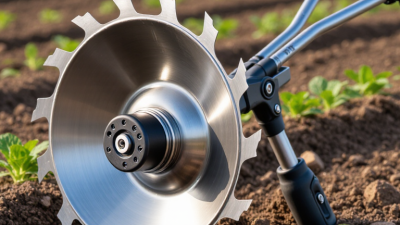
Wheel diameter sets clearance and rolling geometry. Working width should cover the row or bed without striking crop stems; measure the effective cultivated band, not just the frame. Tine count affects how often the soil is disturbed, but more tines can mean more drag and crop contact. Count tine spacing as well. RPM only helps when paired with diameter and forward speed. Compare readings under working conditions, since wheel slip makes catalog figures imperfect.

For young, closely spaced crops, favor narrow coverage and controlled tine engagement. For established rows, wider wheels may save passes, but leave enough crop clearance. I would not copy a single RPM recommendation across fields. It’s a rough guide. Record wheel size, width, tine count, forward speed, and crop injury after each trial; the first pass may still be too aggressive.

What Are the Best Weeding Wheel Types in 2026? — Compare Specs

Weeding Wheel Type Typical Wheel Diameter Typical Working Width Typical Tine / Element Count Estimated Wheel RPM at 4 km/h Common Use
Finger weeder 250–400 mm 100–250 mm per wheel About 12–24 flexible fingers About 65 rpm In-row weeding around established crop plants; flexible fingers disturb small weeds while minimizing crop damage when correctly adjusted.
Star-wheel weeder 300–450 mm 100–250 mm per wheel About 8–12 points or lobes About 57 rpm Shallow cultivation and weed uprooting between crop rows; performance depends on soil condition, working depth, and forward speed.
Basket weeder 250–400 mm 80–180 mm per basket About 12–24 crossbars or rods About 65 rpm Shallow, relatively gentle cultivation in the crop row or between rows; paired baskets are commonly used for more complete coverage.
Rotary tine wheel 300–500 mm 100–300 mm per wheel About 6–12 tines About 51 rpm More assertive soil disturbance for uprooting young weeds; tine shape and operating depth affect crop safety and soil movement.

Figures are representative ranges for common wheel configurations, not product specifications or fixed industry standards. Working width depends on the implement setup. RPM values are estimated theoretical wheel speeds at 4 km/h using the midpoint of each diameter range and assuming no slip; actual ground-driven wheel speed can differ with soil contact and operating conditions.

Assess Field Trials by Weed-Control Efficacy (%) and Operating Speed (km/h)

The best weeding wheel in 2026 depends on how well it removes weeds without disturbing the crop. Field trials should report weed-control efficacy as a percentage and operating speed in km/h. Measure weeds before and after each pass, using the same plot length and counting method. Keep soil moisture, crop stage, and wheel settings consistent. Small differences matter.

Finger wheels can work close to crop rows, while tine and star wheels may suit different soil surfaces and weed stages. Do not compare types using speed alone. A wheel traveling at 8 km/h may leave more weeds than one traveling at 5 km/h, especially in hard or uneven ground. Record crop damage too. It changes the picture.

For a useful trial, test each wheel across several replicated rows, then report average efficacy alongside speed and crop injury. Photograph the same sections before and after treatment. Note misses near plants and weeds left in compacted tracks. These details are easy to overlook. Results from one field should not be treated as universal: soil and weather can shift performance, and a single trial may mislead. A slower setting can be the better choice when it improves control without harming the crop.

Match Wheel Geometry to Row Spacing, Soil Texture, and Crop Stage

A weeding wheel works best when its shape fits the row, not just the tractor. In narrow rows, compact wheels with closely spaced fingers can disturb weeds near the crop without sweeping seedlings aside. Wider rows allow broader wheels and more aggressive coverage. Measure the actual distance between crop stems, not only the planter setting; rows can wander on uneven ground. Small differences matter.

Soil texture changes how a wheel behaves. In loose, sandy soil, lighter contact may uproot young weeds without burying the crop. Sticky clay can cling to fingers, so a more open design may shed soil better. Check the surface after a short pass: cleanly cut weeds and exposed roots are useful signs, while ridged soil can signal excessive pressure. Conditions rarely stay consistent across a whole field.

Crop stage sets the margin for error. Small, well-rooted crops may tolerate closer cultivation than tender transplants or recently emerged seedlings. Adjust wheel angle, depth, and travel speed, then inspect several meters before continuing. A setting that works in the morning may fail after rain. I would not treat one good pass as proof; wheel response changes with moisture, residue, and operator adjustment.

Check Tractor Compatibility and Safety Against ISO 4254-1

A weeding wheel must match the tractor’s hitch, lift capacity, wheel track, and available clearance. Measure the mounted implement with the tractor on level ground. Check that tires, fenders, and hydraulic lines stay clear through full lift and turning. Powered wheels also require a compatible PTO speed and guarded driveline; passive wheels do not. Small details matter.

ISO 4254-1 sets general safety requirements for agricultural machinery, but it is not a stand-alone certificate for every weeding wheel. Check the relevant machine-specific standard and the supplier’s instructions, then inspect guards, pinch points, stability, and safe access before work. A fit chart can still miss uneven ground or a loaded rear axle. Recheck with the implement raised.

Safety data gives that caution weight. The U.S. Bureau of Labor Statistics counted 417 fatal work injuries in agriculture, forestry, fishing, and hunting in 2022. That broad category is not tractor-specific, but it shows why compatibility checks should not be treated as paperwork. Keep the tractor’s manual and inspection notes nearby. A few minutes spent checking can prevent a costly mistake.