Ultimate Tips for Choosing the Right Fertilizer Applicator?
When selecting the right fertilizer applicator, understanding the market landscape is crucial. The global fertilizer applicator market is projected to grow at a compound annual growth rate (CAGR) of 5.4% through 2027. This growth is driven by increased efficiency in agricultural practices and rising food demand. An expert in the field, Dr. John Smith, noted, “Choosing the correct fertilizer applicator is key to maximizing efficiency and minimizing waste.”
Farmers face many choices when it comes to fertilizer applicators. Options vary from conventional spreaders to advanced precision applicators. The type selected can significantly affect crop yield and nutrient management. However, insufficient knowledge often leads to suboptimal decisions. Using the wrong equipment can result in uneven application, causing poor crop performance and environmental harm.
Furthermore, as technology evolves, new applicators introduce both opportunities and challenges. Decisions need careful assessment of soil type, crop requirements, and budget constraints. An informed choice maximizes benefits and aligns with sustainable practices. Recognizing these factors can empower farmers to make better decisions in a rapidly changing industry. Each choice impacts the bottom line and overall agricultural sustainability.
Understanding Different Types of Fertilizer Applicators
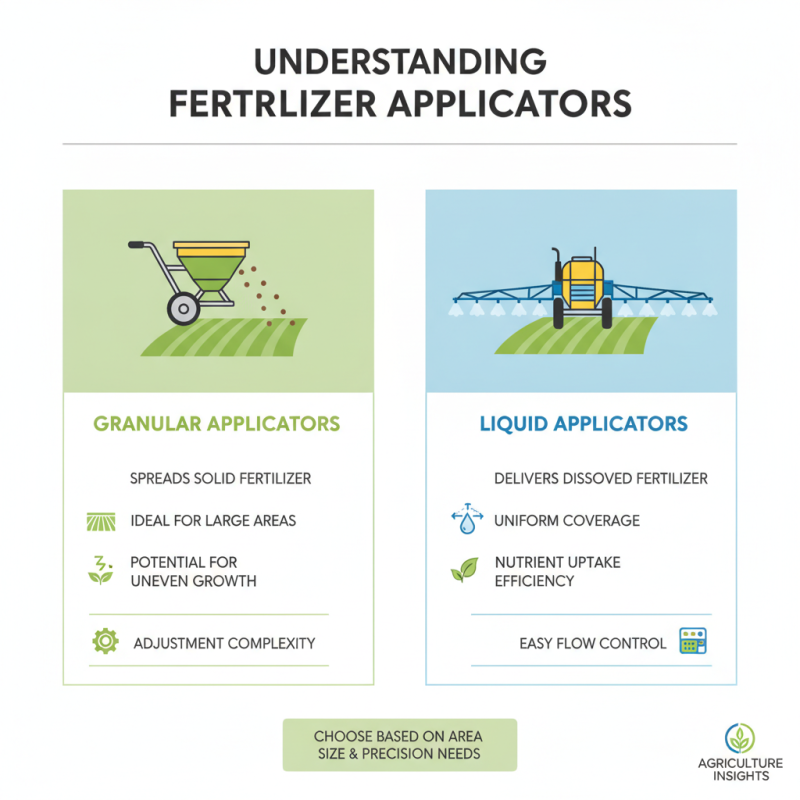
When selecting a fertilizer applicator, understanding the different types available is crucial. There are two main categories: granular and liquid applicators. Granular applicators spread solid fertilizers across the soil. They often work well for large areas. However, uneven application can lead to variable growth. Adjusting settings on these devices is not always straightforward.
Liquid applicators, on the other hand, deliver nutrients in a solution. This method allows for more precise control over the amount of fertilizer applied. It's especially beneficial for targeted areas that require specific nutrient boosts. Yet, calibrating a liquid applicator can be time-consuming. Users may struggle to find the right mix.
Maintenance is another factor to consider. Granular applicators generally require less upkeep. Yet, they can clog if not cleaned properly. Liquid applicators may need regular inspections to ensure proper functioning. Both types have their pros and cons, depending on the user's needs. Awareness of these factors can lead to better choices in the long run.
Key Factors to Consider When Selecting a Fertilizer Applicator
Choosing the right fertilizer applicator can significantly impact your gardening or farming success. One critical factor is the type of application method. Some applicators use broadcast spreaders, while others utilize drop spreaders. Broadcast spreaders cover a larger area, perfect for lawns. However, drop spreaders provide precision for targeted applications, minimizing waste and ensuring even coverage.
Another aspect to consider is the capacity of the applicator. Larger capacity models save time during big jobs, but they may become cumbersome in smaller spaces. Think about the size of your land and the frequency of use. An overly complex device may not be necessary for smaller gardens. Yet, a basic tool may prove inadequate for extensive fields. Assess your situation carefully to find a suitable balance.
Durability is also key. Materials and construction quality determine the longevity of the applicator. Investing in a reliable, long-lasting tool often pays off in the long run. However, finding the right option can be challenging. Research user reviews and seek advice from experienced gardeners or farmers. They can share insights from their own experiences, helping you make a more informed decision.
Examining the Size and Capacity of Fertilizer Applicators
When selecting a fertilizer applicator, size and capacity play crucial roles. Many farmers overlook these factors. Capacity affects how much fertilizer can be applied in one pass. According to USDA reports, a larger capacity means fewer trips to the field. For instance, an applicator with a 1,000-gallon tank can cover more ground efficiently, saving fuel and time.
Yet, bigger isn't always better. Equipment that is too large for small plots can lead to uneven application. Studies show that inaccuracies can reach up to 30% with improper sizing. It can lead to over-fertilization in some areas, harming crops and wasting resources. Therefore, understanding the specific needs of your operation is vital.
Additionally, consider the terrain and crop type. Steeper terrains may require smaller, more maneuverable applicators. Those used in row crops often need precise placement to avoid damage. According to Agri-Data Insights, the right choice may vary by region. Local conditions greatly influence what size and capacity work best. Therefore, evaluating field size and crop needs is essential for optimal performance.
Evaluating Applicator Features: Accuracy and Ease of Use
When evaluating fertilizer applicators, accuracy and ease of use are critical features to consider. A precise applicator ensures that your crops receive the right amount of nutrients. Over-application can lead to damage and environmental issues. Look for models that offer adjustable settings to tailor application rates based on specific crop needs. It can be helpful to check for user reviews on how well an applicator maintains accuracy in various conditions.
Ease of use greatly impacts productivity. A complicated machine may slow down your work and frustrate users. Look for features such as simple controls and a clear display. Lightweight designs can also enhance maneuverability. However, not all easy-to-use models are accurate. It’s essential to strike the right balance. Sometimes, designs that seem user-friendly may lack depth in functionality.
Also, the importance of calibration cannot be overstated. Ensure you understand how to calibrate your applicator correctly. Poor calibration practices can lead to inconsistent results. Take time to read the manual or watch instructional videos. Recognizing your applicator's quirks will enhance performance and yield.
Ultimate Tips for Choosing the Right Fertilizer Applicator
Maintenance and Durability: Making the Right Choice for Longevity
Choosing the right fertilizer applicator involves considering maintenance and durability to ensure long-term use. A study by the American Society of Agronomy highlights that improper maintenance can reduce equipment lifespan by up to 30%. Therefore, regular cleaning and inspection are crucial. Ensure that moving parts are lubricated and that hoses are free from blockages. Neglecting these simple tasks can lead to costly repairs.
Investing in quality materials matters. Stainless steel or high-grade polymers offer better resistance to corrosion. Such materials can handle fertilizers' harsh chemicals. A report from the Agricultural Equipment Manufacturers Association states that equipment made from durable materials tends to last 50% longer than those made from cheaper alternatives.
Tip: Always check for warranty conditions. A long warranty can indicate a manufacturer’s confidence in their product. Also, consider user reviews for insights into real-world performance. Tip: Test the applicator in small areas first to gauge effectiveness. Taking these steps allows for better decisions and minimizes future headaches.