What Are the Top 10 Water Transfer Pumps?
Choosing the right Water Transfer Pump requires more than comparing horsepower, flow rate, or advertised price. A pump must move water reliably through real conditions: uneven ground, long hoses, dirty intake screens, changing elevations, and unpredictable demand.
The International Energy Agency reports that water and wastewater services consume about 4% of global electricity. Pump efficiency therefore affects operating cost, emissions, and equipment life. The U.S. Department of Energy also emphasizes system-level design, including pipe friction, controls, maintenance, and correct sizing. A powerful pump can still waste energy if the discharge line is too narrow.
The details matter. Small errors multiply.
Igor J. Karassik, a respected pump engineer and co-author of the Pump Handbook, offered a principle that remains highly relevant: “The pump is only one part of the pumping system.” His view helps explain why the best model depends on the complete application, not a single specification.
This guide compares ten leading Water Transfer Pump options by flow performance, lift capability, construction, fuel or electrical demands, portability, service access, and practical reliability. It considers agricultural irrigation, construction dewatering, emergency drainage, residential transfer, and general industrial use. Manufacturer claims are useful, but independent testing and field experience deserve equal attention.
No ranking is perfect. A compact electric pump may outperform a gasoline model in a quiet basement, while a trash pump may be essential beside a muddy excavation. Readers should verify local voltage, water quality, hose diameter, duty cycle, and safety requirements before purchasing. The most expensive choice is not always the most capable one.
What Is a Water Transfer Pump and How Does It Work?
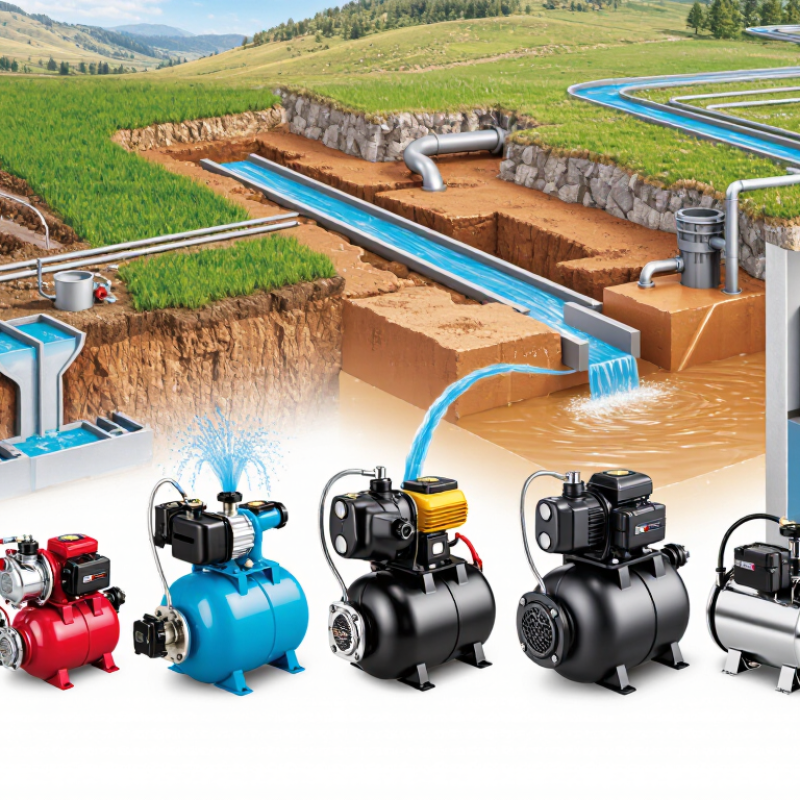
A water transfer pump moves water from one location to another through suction and discharge lines. Most models use a centrifugal design. An electric motor spins an impeller inside a casing. The impeller accelerates water outward, creating pressure at the outlet. Lower pressure near the impeller center draws more water through the inlet. This cycle continues while the pump receives water and power.
The process sounds simple, but installation changes performance. The suction hose must stay airtight and remain below the water level. A clogged strainer can reduce flow within minutes. Many centrifugal pumps also need priming before operation. Without water around the impeller, the pump may run dry, overheat, and suffer seal damage. Positive-displacement pumps work differently. They trap fixed volumes and push them forward, making them useful for thicker liquids or controlled dosing.
Water transfer matters beyond construction and emergency drainage. The UNESCO World Water Development Report 2024 reports that agriculture represents about 70% of global freshwater withdrawals. That figure shows why efficient pumping deserves practical attention. The U.S. Department of Energy’s pumping-system guidance also emphasizes correct sizing, system controls, and maintenance over simply choosing a larger motor. Bigger is not automatically better. In field conditions, actual flow can fall below the specification because of elevation, pipe friction, or poor priming. A top-ten comparison should therefore examine head, flow rate, fuel or power use, portability, and service access—not only advertised capacity.
Which Pump Types Are Best for Different Water Transfer Tasks?
What Are the Top 10 Water Transfer Pumps?
Which Pump Types Are Best for Different Water Transfer Tasks?
Choosing among the top ten water transfer pumps depends on water quality, distance, lift, and available power. Centrifugal pumps suit clean water and steady flow. Self-priming pumps help when the intake line may contain air. Submersible pumps work well in flooded basements, wells, and pits because they operate underwater. Utility pumps handle light household drainage, but their capacity is often limited.
Diaphragm pumps tolerate muddy water and small debris better than many standard designs. Trash pumps are stronger choices for leaves, grit, and construction-site runoff. High-pressure pumps serve sprinklers, long hoses, and uphill transfer tasks. Electric pumps are quieter and practical near reliable outlets. Petrol-powered pumps provide mobility for farms, remote fields, and emergency drainage. Solar-powered pumps can move water where grid access is difficult, although output changes with sunlight.
Match the pump to the job.
Check the total head, not only the pipe length. A pump lifting water three meters may struggle when narrow hoses add resistance. I have seen users select a powerful pump, then connect it to an undersized hose. The result was noise, heat, and disappointing flow. That mistake is easy to repeat. Verify the manufacturer’s flow curve, maximum particle size, inlet diameter, and duty cycle. A strainer protects many pumps, but it can clog quickly in silty water. Cleaning access matters more than many buyers expect.
What Are the Top 10 Water Transfer Pumps by Performance and Design?
When performance and design matter, the top ten water transfer pumps are not identical. Each fits a different water-moving job. High-head centrifugal pumps suit long hoses and raised tanks. High-flow centrifugal pumps move large volumes across short distances. Self-priming centrifugal pumps reduce setup delays. Trash pumps handle muddy water and small debris. Diaphragm pumps tolerate intermittent flow and rough conditions.
Submersible pumps are practical for flooded basements, wells, and collection pits. Shallow-well jet pumps work best where suction lift stays modest. Positive-displacement transfer pumps deliver steady output at lower flow rates. Solar-compatible pumps help remote users reduce generator dependence. Compact utility pumps fit drainage tasks around homes and workshops.
During field selection, I check flow at the actual hose length, not the brochure maximum. An efficient impeller matters, but a restrictive fitting can erase its advantage. Look for corrosion-resistant casings, sealed bearings, accessible strainers, and clear overload protection. Noise, priming time, cable length, and repair access also shape daily performance. Do not trust impressive numbers alone. A pump rated at 300 liters per minute may slow sharply through a narrow hose. I sometimes favor a simpler design over a faster one. That choice is less exciting, yet easier to maintain. Even experienced users can overlook suction leaks. Small details decide whether water arrives steadily or in frustrating bursts.
How Do You Compare Pump Capacity, Pressure, Power, and Efficiency?
When comparing the top 10 water transfer pumps, start with the duty point, not the advertised maximum flow. Capacity means the actual flow rate, usually measured in liters per second or cubic meters per hour. Pressure is better assessed as total dynamic head, including elevation, pipe friction, valves, and fittings. A pump rated for 100 m³/h may deliver far less through a narrow, 80-meter pipeline. That detail is often missed.
The U.S. Department of Energy’s Pumping System Assessment Tool guidance reports that pumping systems can represent 25% to 50% of electricity use in some industrial facilities. Therefore, power deserves careful checking. Hydraulic power follows the formula: water density × gravity × flow × head. For example, moving 20 liters per second through 30 meters requires about 5.9 kW of hydraulic power. At 65% efficiency, the motor needs roughly 9.1 kW. Small losses become expensive when the pump runs daily.
Efficiency should be compared at the expected operating point, not at the best laboratory value. The Hydraulic Institute recommends evaluating pump performance across the full system curve, including start-up and seasonal demand. Centrifugal pumps suit steady, clean-water transfer; positive-displacement pumps can handle controlled, high-pressure dosing. Field measurements help: record suction pressure, discharge pressure, flow, voltage, and current. Simple. Yet meter accuracy can be poor. Recheck readings before selecting a larger motor, because oversizing may create throttling, noise, and unnecessary energy use. Personally, I would compare lifecycle cost before purchase price, although that judgment can change when maintenance access is limited.
What Safety, Maintenance, and Installation Factors Should You Consider?
Choosing among the top 10 water transfer pumps requires more than comparing flow rates. Safety, maintenance, and installation conditions often determine long-term performance. Select a pump rated for the water temperature, pressure, and expected operating hours. A unit designed for clean water may fail quickly with sand, sludge, or corrosive liquid. Check the electrical supply carefully. Grounded connections, weather-resistant covers, and a residual-current safety device can reduce shock risks. Keep cables away from standing water.
Installation begins with a stable, level surface. Use a suction hose with the correct diameter, and keep it as short as practical. Tighten every connection, because a small air leak can stop priming. Never run a pump dry, even briefly. It may damage seals before an operator notices. Place an intake screen above the container floor to avoid drawing sediment. However, screens can clog. This detail is easy to overlook.
Tips: Inspect hoses, clamps, seals, and the intake screen before each use. Listen for rattling, unusual vibration, or a changing motor sound. Clean debris after pumping, then drain the housing before storage. Follow the maintenance schedule, but do not treat it as perfect. Actual water quality and usage may require more frequent service. Record operating hours and repairs in a simple log. Small notes prevent repeated mistakes. Always isolate power before opening the pump or removing a blockage.