Leave Your Message

China Top Corn Planter Manufacturers for Global Buyers

China has become an important sourcing base for modern Corn Planter equipment. Its manufacturers serve farms ranging from compact family holdings to large commercial operations.

Global demand remains closely tied to corn acreage, labor costs, and planting precision. The USDA Foreign Agricultural Service Production, Supply and Distribution database tracks corn output, harvested area, and trade flows worldwide. FAO’s statistical reports also show how mechanization supports productivity when farms face labor shortages and tighter planting windows.

The equipment details matter. A reliable Corn Planter should maintain seed spacing across uneven ground. It should also provide stable depth control, practical row-unit adjustment, and accessible replacement parts. A planter that looks impressive in a catalog may perform differently in wet soil.

That is where factory experience becomes valuable. Buyers should examine field-testing records, export references, calibration procedures, and after-sales response times. Video demonstrations help, but they cannot replace soil trials.

Precision-agriculture specialist Dr. John Fulton emphasizes a practical principle: “The right input, at the right place, at the right time.” His observation reflects the core purpose of modern planting technology: consistent seed placement with less waste.

China’s leading manufacturers increasingly combine mechanical simplicity with electric monitoring, GPS compatibility, and variable-rate capabilities. These features can improve operational visibility, although they may increase training requirements. Not every farm needs the most advanced system.

No ranking is flawless. Soil type, tractor power, seed size, and local service capacity can change the best choice. This guide therefore evaluates China’s top Corn Planter manufacturers through product design, manufacturing experience, quality documentation, international support, and buyer feedback. Evidence matters more than polished claims.
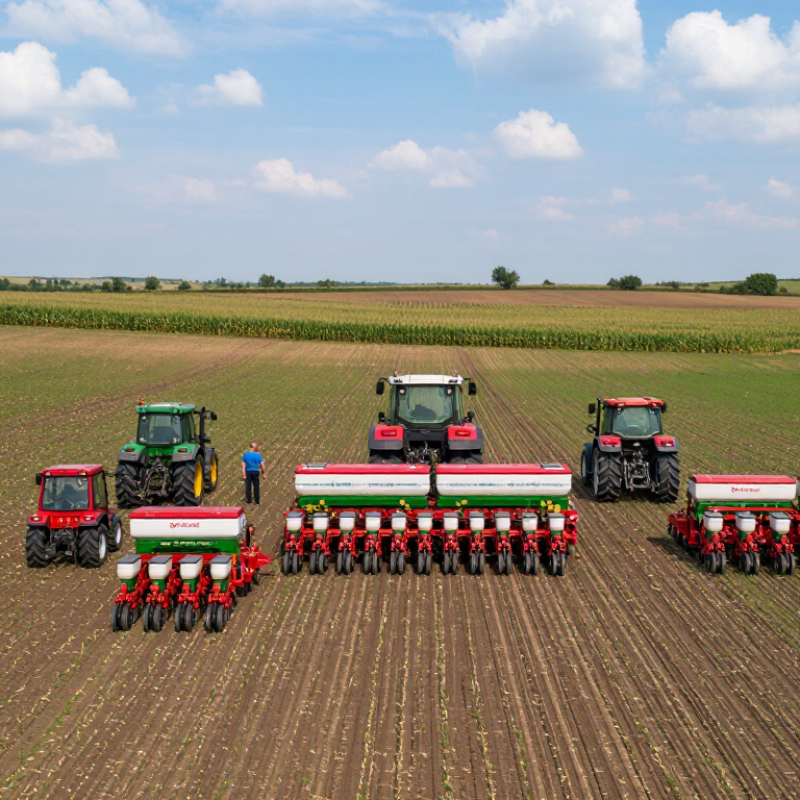
China Top Corn Planter Manufacturers for Global Buyers

What Defines a Leading Chinese Corn Planter Manufacturer

What Defines a Leading Chinese Corn Planter Manufacturer

A leading Chinese corn planter manufacturer begins with field evidence, not factory size. USDA Foreign Agricultural Service forecasts global corn production near 1.22 billion metric tons in 2024/25. That scale demands dependable planting equipment across compacted soil, heavy residue, and uneven fields. A serious manufacturer tests seed meters under different seed shapes and moisture levels. It records missed seeds, doubles, spacing errors, and emergence rates. Small measurements matter.

Engineering depth is equally important. Modern planters should maintain stable depth when ground conditions change. Robust frames, adjustable row spacing, low-maintenance metering units, and clear calibration procedures improve daily performance. ISO-based quality systems can support consistency, but paperwork cannot replace field trials. Buyers should request test records, spare-parts lists, and service response times. Ask for evidence.

Export capability also defines leadership. The manufacturer should understand local seed sizes, tractor power limits, transport rules, and operator habits. CE conformity may support access to certain markets, but requirements differ by destination. Technical manuals need accurate diagrams and practical language. Remote support helps, yet trained local technicians remain valuable.

No factory gets every soil condition right. That is worth admitting. A manufacturer that shares test limitations appears more reliable than one promising universal results. The strongest suppliers improve designs through dealer feedback, warranty analysis, and repeated seasonal trials. Their advantage is not only a lower purchase price. It is predictable planting during a narrow and expensive field window.
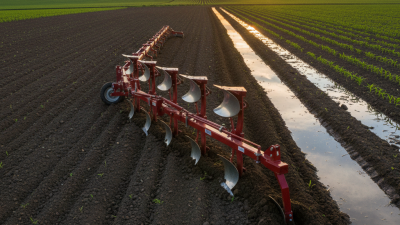
What Defines a Leading Chinese Corn Planter Manufacturer?

Working width is a practical benchmark for corn planter selection. The figures shown are calculated from common row configurations and standard row spacings used in commercial corn planting: working width = number of rows × row spacing. A leading manufacturer should offer scalable configurations, accurate seed placement, durable construction, and compatibility with different tractor capacities.

How Corn Planters Are Designed and Manufactured in China

China’s corn planter manufacturing process begins with field requirements, not just machine drawings. Engineers study row spacing, soil texture, seed size, and tractor power before selecting a planting structure. Common designs use a steel frame, metering units, furrow openers, covering wheels, and adjustable depth controls. Each part has a practical role.

Computer-aided design helps engineers check clearance and load distribution. Prototype units then undergo shop testing with real seed batches. Technicians measure seed spacing, planting depth, missed seeds, and double drops. They also inspect weld penetration and shaft alignment. Small details matter. A loose chain can affect an entire day’s planting.

Manufacturers typically use laser cutting, press forming, precision machining, and controlled welding. Painted or coated surfaces help resist moisture and soil abrasion. Before shipment, workers often run dry tests, seed tests, and transport inspections. Records for dimensions, materials, and adjustments improve traceability for overseas buyers. Export preparation may include reinforced frames, spare wear parts, manuals, and packaging suited to long-distance handling.

No planter design is perfect for every farm. A model tested in dry soil may perform differently in heavy clay. This is where honest communication becomes important. Buyers should request test data, adjustment ranges, replacement-part support, and clear production tolerances. Factory experience helps, but field feedback should still challenge old assumptions.

China Top Corn Planter Manufacturers for Global Buyers - How Corn Planters Are Designed and Manufactured in China

Design or Manufacturing Dimension Common Configuration or Practice Typical Technical Data Why It Matters to Global Buyers
Planter Type Mechanical precision planter, pneumatic vacuum planter, no-till planter, or fertilizer-seeding combination planter Configuration depends on seed size, soil condition, residue level, and tractor capacity Buyers should match the machine type with local soil preparation methods and seed varieties
Number of Planting Rows Compact machines for small farms and multi-row machines for commercial field operations 2, 4, 6, 8, or 12 rows are common configurations More rows increase field capacity but also require greater tractor power, lifting capacity, and transport width
Row Spacing Adjustable row units mounted on a rigid or folding toolbar Approximately 45–75 cm, depending on crop system and regional farming practice Correct row spacing supports plant population targets and allows compatibility with cultivators and harvesters
Seed Spacing Controlled by a seed metering plate, vacuum disc, or mechanical finger-pickup system Commonly adjustable from about 10–30 cm between seeds Accurate spacing reduces doubles and skips and helps achieve a uniform crop stand
Planting Depth Depth controlled by gauge wheels, a depth-adjustment handle, and a furrow-opening system Usually adjustable within approximately 2–6 cm Depth control is important for consistent emergence, especially where soil moisture varies across the field
Seed Metering System Mechanical cells or pneumatic vacuum discs matched to seed size and shape Disc or plate selection is normally required for different corn seed grades Buyers should request the correct metering discs and verify performance with their locally available seed
Seed Hopper Capacity Individual hoppers are commonly fitted above each row unit Approximately 20–60 L per row is typical for many tractor-mounted designs Larger hoppers reduce refill frequency but increase machine weight and lifting requirements
Fertilizer System Optional granular fertilizer boxes with separate delivery tubes and adjustable metering devices Application rate is adjusted according to fertilizer type, field plan, and calibration results Separate fertilizer placement can improve operational efficiency, but calibration is necessary to prevent over-application
Furrow-Opening Components Double-disc openers, shoe openers, or coulters selected for conventional or reduced-tillage conditions Disc diameter, opener angle, and down-pressure settings vary by machine design The opener design affects seed placement, residue handling, soil disturbance, and wear life
Closing and Press Wheels V-shaped closing wheels, rubber press wheels, or adjustable soil-contact wheels Pressure and wheel position are commonly adjustable for different soil textures Proper closing improves seed-to-soil contact without excessively compacting the seed zone
Tractor Power Requirement Power demand depends on row count, soil resistance, fertilizer equipment, and no-till capability A broad planning estimate is about 15–25 hp per row, subject to field conditions Actual tractor matching should be confirmed using machine weight, draft requirement, hydraulic demand, and terrain
Working Width Calculated from the number of rows and the selected row spacing For example, 6 rows at 60 cm spacing cover approximately 3.6 m between outer row centers Working width influences field capacity, transport dimensions, headland turning, and shipping arrangements
Frame Manufacturing Steel profiles and plates are cut, formed, drilled, and assembled into a toolbar and row-unit supports Laser cutting, CNC machining, press-brake forming, and fixture-based assembly are commonly used processes Accurate frame geometry helps maintain consistent row spacing and reduces alignment problems during operation
Welding and Structural Quality Subassemblies are welded with manual or semi-automated processes and checked for distortion Critical mounting points require dimensional inspection after welding Stable welds and accurate mounting surfaces support durability under vibration and field loads
Surface Treatment Components are cleaned, treated against corrosion, painted, or powder coated before final assembly Common protection methods include shot blasting, powder coating, and liquid industrial paint Surface preparation and coating quality affect corrosion resistance during overseas transport and field storage
Component Standardization Bearings, chains, sprockets, fasteners, and hydraulic fittings are selected according to the machine design and target market Metric fasteners and metric hydraulic connections are common in Chinese-manufactured agricultural machinery Buyers should confirm replacement-part availability and connection compatibility before placing an order
Calibration and Field Testing Seed and fertilizer meters are tested by collecting output over a measured distance or number of revolutions Checks commonly include seed spacing, missed seeds, doubles, planting depth, and fertilizer rate Calibration records help buyers verify machine performance before shipment and during commissioning
Quality Inspection Inspection may cover dimensions, fastener torque, weld appearance, paint condition, rotating parts, and safety guards Factory acceptance criteria should be agreed in writing before production A documented inspection plan reduces uncertainty for international buyers purchasing without an on-site visit
Export Preparation Planters are partially disassembled or folded, protected against moisture, and secured on pallets or in containers Packaging requirements depend on machine size, shipping method, destination, and local import rules Buyers should confirm package dimensions, gross weight, spare-parts packing, manuals, and customs documents
Buyer Verification Checklist Review drawings, seed compatibility, row spacing, tractor requirements, spare parts, warranty terms, and test results Request a machine specification sheet and a pre-shipment inspection record Technical verification is more reliable than comparing supplier descriptions or catalog photographs alone

Note: The figures shown are general industry ranges for agricultural equipment planning. Final specifications vary by planter configuration, seed type, soil condition, tractor model, and destination-market requirements.

Main Corn Planter Types and Features for Global Buyers

China Top Corn Planter Manufacturers for Global Buyers

Corn planters differ by metering system, planting scale, and field conditions. Mechanical plate planters are simple, durable, and easier to repair in remote areas. They suit farms using consistent seed sizes and moderate planting speeds. Pneumatic planters use air pressure to separate seeds accurately. They support higher working speeds and reduce missed or doubled seeds. However, they need clean airflow and regular fan inspection.

Single-row and multi-row planters serve different operations. Single-row models offer better flexibility for small plots and uneven fields. Multi-row units improve daily output across large, prepared fields. Key features include adjustable row spacing, depth control, fertilizer placement, and residue-handling discs. Strong frames matter on rough ground. Stable gauge wheels help maintain uniform seed depth. Small depth changes can affect emergence.

Tips: Check seed size before choosing the metering system. Test the planter with actual seed, not only empty runs. Confirm tractor horsepower, hitch capacity, and local spare-part access. Clean seed plates after dusty work. Measure spacing in the field. Do not trust the display alone. I have seen good machines perform poorly after rushed calibration. This part is often underestimated. Leave room for adjustment, because soil moisture and residue can change during the same day.

How to Evaluate Chinese Suppliers and Product Quality

China Top Corn Planter Manufacturers for Global Buyers

Buying corn planters from China requires more than comparing catalog prices. A reliable evaluation begins with the factory, not the sales message. Ask for legal registration details, production capacity, export experience, and recent quality records. Request a live video inspection or visit the assembly area. Look for consistent welding, protected wiring, clean hydraulic connections, and labeled spare parts. Small details matter.

For product quality, request a complete specification sheet and a sample unit when possible. Check row spacing adjustment, seed-metering accuracy, hopper sealing, frame thickness, and compatibility with your tractor’s power take-off. Run the planter over uneven soil, not only on a clean showroom floor. Measure missed seeds and double drops across several rows. One short test can hide weaknesses. Ask for inspection reports, material certificates, warranty terms, and an operating manual in your working language. Documents should match the machine.

Supplier reliability appears during difficult conversations. Ask how they handle damaged shipments, replacement parts, production delays, and design changes. Response speed is useful evidence, but it is not proof. Contact two or three previous overseas customers, with permission, and ask about actual field performance. I would also compare a low-priced offer with its steel grade, bearings, paint process, and packaging method. Cheap can become expensive. My own evaluation is never perfect; supplier photos may be staged, and a factory visit can miss seasonal problems. Keep written records, use independent inspection where practical, and approve payment stages only after defined checks.

Export, Compliance, and After-Sales Considerations

China’s corn planter manufacturers serve buyers across diverse farming conditions. The USDA’s 2024/25 outlook places global corn production near 1.2 billion metric tons. That scale increases demand for reliable planting equipment and responsive export support.

Export quality begins with documentation, not the container. Buyers should request commercial invoices, packing lists, manuals, spare-parts catalogs, and machine serial records. China ranked 19th among 139 economies in the World Bank’s 2023 Logistics Performance Index, scoring 3.7 overall. Still, port delays and incomplete documents can disrupt seasonal deliveries. Confirm HS classification, wooden-packaging treatment, insurance terms, and destination-country machinery rules before payment. For European shipments, verify the applicable safety assessment and conformity documents. ISO 4254-1 offers a useful reference for agricultural machinery safety. Requirements can differ by market.

After-sales support needs measurable commitments. Ask for remote troubleshooting within one business day and critical-parts availability for at least one planting season. A practical package includes seed-meter calibration guidance, disc replacements, hydraulic diagrams, and operator training videos. Test units with local seed sizes and soil conditions whenever possible. Factory demonstrations can look perfect. Real fields are less forgiving. A perfect checklist does not exist. Seasonal service capacity may also be weaker than sales presentations suggest, so buyers should inspect response records, warranty exclusions, and distributor training evidence before signing.