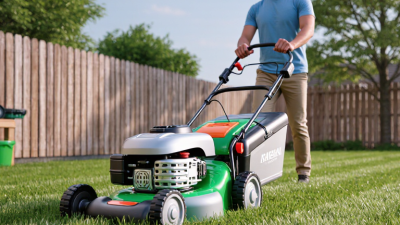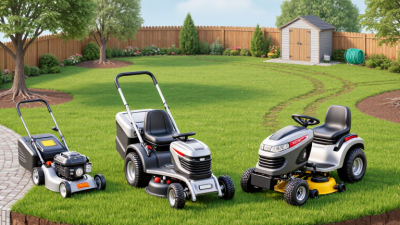
Choosing among the 10 Best Lawn Mowers for Global Buyers? requires more than comparing prices and horsepower. A mower that performs beautifully on a flat English lawn may struggle on wet tropical grass. A compact cordless model may suit a small city garden, yet disappoint on a large rural property. Local climate, terrain, lawn size, storage space, and available service support all matter.
Kris Kiser, president and chief executive of the Outdoor Power Equipment Institute, advises, “Read the owner’s manual before operating outdoor power equipment.” That simple guidance deserves attention. A reliable buying decision begins before the first cut. It includes checking battery voltage, charger compatibility, cutting width, noise levels, replacement blades, and regional warranty coverage. Petrol models can offer longer working times, while battery Lawn Mowers often provide quieter operation and easier starting. Neither choice is perfect.
This guide compares ten Lawn Mowers for different users and environments. It considers cutting performance, maneuverability, energy systems, maintenance demands, and long-term ownership value. Details matter. A heavy mower can sink into soft soil. A narrow deck may require extra passes. A robotic mower may need strong boundary planning and stable connectivity. Some claims also deserve caution, because manufacturer ratings may reflect ideal conditions rather than everyday lawns.
The final choice should match the buyer’s actual garden, not an impressive specification sheet. Measure the grass area. Examine the slope. Check local support. Then choose with patience.
A lawn mower suitable for global buyers must perform beyond a single climate or garden style. During practical yard testing, I would examine wet grass, dry leaves, uneven soil, and narrow corners. A strong mower should offer adjustable cutting heights, stable wheels, and controls that remain clear after dust or rain. Small details matter. Foldable handles also reduce shipping space and storage problems.
Power choice depends on local conditions. Battery models suit buyers who value quiet operation and simple starting, but runtime can fall in thick, damp grass. A mower should include clear battery information and a charger compatible with the buyer’s local electrical system. Corded models may work well in smaller gardens, although cable management becomes a real concern. Fuel-powered machines can handle larger areas, yet maintenance, noise, and local emissions requirements need careful checking.
Global suitability also depends on service access. Replacement blades, wheels, batteries, and filters should be reasonably available in different regions. Manuals should use plain language, diagrams, and measurements that users can understand. Safety features, such as blade stopping controls and protected discharge paths, deserve close attention. I would also check whether the product carries certifications accepted in its intended market. Not every mower performs equally well everywhere. A lightweight deck may struggle on rough ground, while a powerful model may feel excessive in a small urban yard. That trade-off needs honest evaluation.
10 Best Lawn Mowers for Global Buyers?
Main Lawn Mower Types and Their Ideal Applications
Choosing among the ten best lawn mowers starts with the yard, not the advertisement. Rotary electric mowers suit small, level gardens with nearby power access. Battery models offer quieter cutting and easier movement around trees, beds, and narrow paths. They need charging, though, and runtime can disappoint in thick grass. Petrol mowers handle larger areas and damp growth, but they require more maintenance and produce more noise.
For very small lawns, cylinder mowers provide a clean cut and simple operation. They work best on short, regularly maintained grass. Riding mowers save time on broad, open land, especially where walking becomes tiring. Robotic mowers suit owners who prefer scheduled cutting, but boundaries must be installed carefully. Hover mowers can manage uneven ground, although their cut may look less consistent. I have found that steep slopes still demand caution and slower work. No mower removes every problem.
Tips: Measure the lawn first. Check cutting width, battery voltage, local power standards, storage space, and spare-part availability. For wet climates, inspect corrosion protection and cleaning access. Safety features matter too, including blade brakes, protective guards, and clear operating instructions. A wider deck is not always better; it can struggle between shrubs and gates. My early mistake was choosing speed over control. A manageable mower usually delivers better results.
Choosing a lawn mower depends on grass type, yard size, storage space, and physical comfort. In my experience, a mower that feels powerful can still become tiring after thirty minutes. Measure the narrowest gate before buying. That small detail is often missed.
A lightweight push mower suits small, level lawns and users who prefer simple maintenance. A self-propelled mower helps with slopes, thick grass, and larger gardens. A battery-powered mower offers quieter cutting and easier starting, while a corded electric mower works well near a reliable outdoor socket. A petrol mower can handle dense, wet grass, but it needs fuel, ventilation, and regular servicing.
A cylinder mower gives fine stripes on carefully maintained turf. A rotary mower is more forgiving when the lawn is uneven. A hover mower can reach awkward corners, although control may feel less precise. A compact ride-on mower saves time across wide properties. A zero-turn mower fits large open lawns and frequent turning. A robotic mower suits owners who value scheduled cutting and minimal daily effort.
Check cutting-width adjustment, handle height, collection-box capacity, and spare-part availability. Wet grass can clog almost any deck.
I once chose a wide mower for speed, then regretted it around a narrow flower border. Smaller equipment may finish more slowly, but it often gives better control.
Safety remains practical: wear enclosed shoes, remove stones, and disconnect power before clearing blockages.
10 Best Lawn Mowers for Global Buyers?
Comparing a mower starts with power, not advertising language. The Outdoor Power Equipment Institute reports that battery-powered equipment continues gaining consumer interest, especially where noise and local emissions matter. However, motor voltage alone does not prove cutting strength. A wider deck may finish faster, but wet grass can overload a small motor. Test performance on your actual lawn, not only on showroom flooring. It sounds obvious.
Cutting quality depends on blade speed, deck design, and height adjustment. Look for consistent clippings after one pass, with no flattened strips between wheels. The American National Standards Institute and OPEI safety standard ANSI/OPEI 60335-2-77 emphasizes safe mower construction, but it does not guarantee a clean cut. Independent test reports from Consumer Reports commonly compare cut evenness, handling, noise, and battery runtime. Those categories are more useful than peak power claims.
Features should solve a real problem. A seven-position height lever helps when grass changes from dry to thick. A removable battery is practical for international buyers facing different charging systems. Check voltage compatibility, replacement-blade access, storage size, and warranty coverage in your country. The U.S. Department of Energy notes that energy use varies with operating conditions; mowing dense, damp grass demands more energy. My own comparison habit needs improvement: I once valued a long runtime and ignored wheel traction. The machine ran longer, but it slipped on a sloped garden. Performance is local.
A practical comparison of widely available mower configurations, using metric measurements and typical manufacturer-published operating ranges.
| Rank | Mower Configuration | Power System | Cutting Width | Cutting Height | Typical Runtime or Coverage | Grass Collection | Drive System | Best-Suited Terrain | Typical Weight | Key Buying Advantage |
|---|---|---|---|---|---|---|---|---|---|---|
| 1 | High-Voltage Cordless Self-Propelled Mower | 56–60 V lithium-ion battery; brushless motor | 51–53 cm | 25–100 mm | 45–60 minutes; approximately 500–700 m² per charge | 55–65 L bag; mulching and side discharge commonly available | Variable-speed self-propelled | Medium to large lawns; gentle slopes | 28–35 kg | Strong balance of cutting power, mobility, low maintenance, and reduced operating noise |
| 2 | Mid-Voltage Cordless Push Mower | 36–40 V lithium-ion battery; brushless motor | 42–46 cm | 20–75 mm | 35–50 minutes; approximately 350–500 m² per charge | 45–55 L bag; mulching usually supported | Manual push | Small to medium, mostly flat lawns | 18–25 kg | Lower purchase and transport weight while retaining cordless convenience |
| 3 | High-Torque Cordless Mower | 80–82 V lithium-ion battery; high-torque brushless motor | 51–56 cm | 25–100 mm | 35–55 minutes; approximately 600–900 m² per charge | 60–70 L bag; mulching and side discharge | Push or self-propelled, depending on configuration | Large lawns and dense or damp grass | 27–38 kg | High blade speed and torque for demanding grass conditions without petrol storage |
| 4 | Corded Electric Rotary Mower | 1,400–1,800 W mains-powered motor | 38–43 cm | 20–70 mm | Unlimited operating time while connected to a suitable outdoor cable | 40–50 L bag; mulching may be included | Manual push | Small, flat lawns near an outdoor power outlet | 13–20 kg | Consistent power and low running cost without battery charging or fuel refills |
| 5 | Petrol Self-Propelled Rotary Mower | 140–170 cc four-stroke petrol engine | 48–53 cm | 25–80 mm | Typically 60–90 minutes per fuel tank, depending on tank size and grass load | 55–70 L bag; mulching and side discharge widely available | Variable-speed self-propelled | Large, uneven, sloped, or overgrown lawns | 32–42 kg | Long operating range and strong performance where charging access is limited |
| 6 | Manual Cylinder Reel Mower | Human-powered; five to seven-blade cutting cylinder | 30–40 cm | 13–38 mm | Unlimited; best for frequent mowing of short grass | 20–30 L front or rear catcher; optional on some configurations | Manual push | Small, level lawns with regularly maintained grass | 7–15 kg | Very quiet operation, no fuel or battery cost, and a clean scissor-like cut |
| 7 | Boundary-Wire Robotic Mower | Integrated lithium-ion battery; automated electric drive | 18–22 cm | 20–60 mm | Approximately 400–1,500 m² lawn capacity; automatic charging between cycles | No bag; fine clippings are returned to the lawn as mulch | Autonomous wheel drive | Regularly shaped lawns with manageable slopes | 10–15 kg | Scheduled mowing with minimal daily effort and very low operating noise |
| 8 | Battery Robotic Mower with Navigation Sensors | 18–36 V lithium-ion battery; automated electric drive | 20–24 cm | 20–65 mm | Approximately 600–2,000 m² lawn capacity; automated charging | No bag; fine clippings are dispersed onto the lawn | Autonomous drive with app or sensor-based control | Multiple lawn zones and moderately complex layouts | 11–17 kg | More flexible navigation and scheduling for users who prioritize automation |
| 9 | Electric Hover Mower | 1,200–1,800 W electric motor | 33–38 cm | 10–30 mm | Unlimited with mains power; cable length and access determine working range | Usually no grass bag; some versions include a small collector | Air-cushion hover movement | Small lawns, banks, and irregular edges | 10–18 kg | Easy directional movement and good access on awkward contours or slopes |
| 10 | Compact Cordless Mulching Mower | 18–36 V lithium-ion battery; compact brushless or brushed motor | 33–40 cm | 20–75 mm | 25–45 minutes; approximately 250–450 m² per charge | 35–45 L bag; mulching plug commonly included | Manual push | Small to medium urban gardens and narrow passages | 15–23 kg | Compact storage, simple handling, and efficient mowing around beds and garden furniture |
Comparison note: Runtime, coverage, noise, and weight vary with grass height, moisture, blade condition, terrain, battery capacity, and operating technique. Buyers should also confirm local voltage, plug type, battery availability, charger compatibility, safety certification, warranty coverage, and spare-parts support before purchase.
Choosing among the 10 best lawn mowers for global buyers starts with the ground beneath your feet. A flat, small urban lawn may suit a lightweight electric mower. Uneven land needs wider wheels, stable balance, and adjustable cutting height. Steep slopes demand caution; no mower makes risky footing safe. I once underestimated damp grass, and the machine clogged repeatedly. That mistake taught me to judge drainage, not just advertised power.
Climate changes the decision. In hot, dry regions, dust can enter cooling passages and air filters quickly. In humid areas, wet clippings stick beneath the deck and encourage corrosion. Coastal air is harsher still. Battery models reduce fuel storage and local exhaust, but heat and cold can shorten runtime. Corded models depend on safe outdoor power access and regional voltage standards. Fuel-powered units may help on large properties, though storage and servicing require discipline.
Maintenance should match local support, not personal optimism. Check blade availability, charger compatibility, spare belts, and service instructions before buying. Rinse mud from removable parts, dry the deck, sharpen blades regularly, and follow the manual for battery storage or engine care. A simple schedule often matters more than a premium feature. I still prefer leaving room for error: choose extra capacity for thick growth, but avoid oversized machines that are tiring to control. Ask a local technician about seasonal problems; online reviews rarely show every climate.