What Are the Top Film Covering Machine Types in 2026?
Film packaging is not one machine category. It covers equipment that stretches, shrinks, seals, or laminates film around products. In 2026, buyers comparing a Film Covering Machine should look beyond speed claims. Product shape, film type, changeover time, and available floor space all affect the right choice. A tray of bottled drinks needs different handling from a single carton. Small details matter.
Industry reports offer useful context, though they do not rank every machine type. PMMI’s 2024 State of the Industry report estimated U.S. packaging machinery shipments at about $10.2 billion in 2023, reflecting the scale of investment in packaging equipment. The report also discusses pressures such as labor availability and automation. Smithers’ packaging-film market research tracks material trends that influence equipment choices, including demand for flexible packaging. These figures describe the wider market, not Film Covering Machine sales specifically. That distinction is easy to miss.
This guide compares common options: stretch wrapping, shrink wrapping, flow wrapping, and film-lamination systems. Each solves a different problem. Stretch wrappers secure pallet loads with tensioned film, while shrink systems use heat to form a close-fitting cover. Flow wrappers create sealed packs around individual products. Laminators bond film to a surface rather than simply wrapping it. No type wins everywhere. The practical choice depends on throughput, protection needs, film costs, and operator skill. There is no perfect shortlist. Real production lines can be messier than catalog examples.
Film Covering Machines in 2026: Core Functions and Web-Handling Components
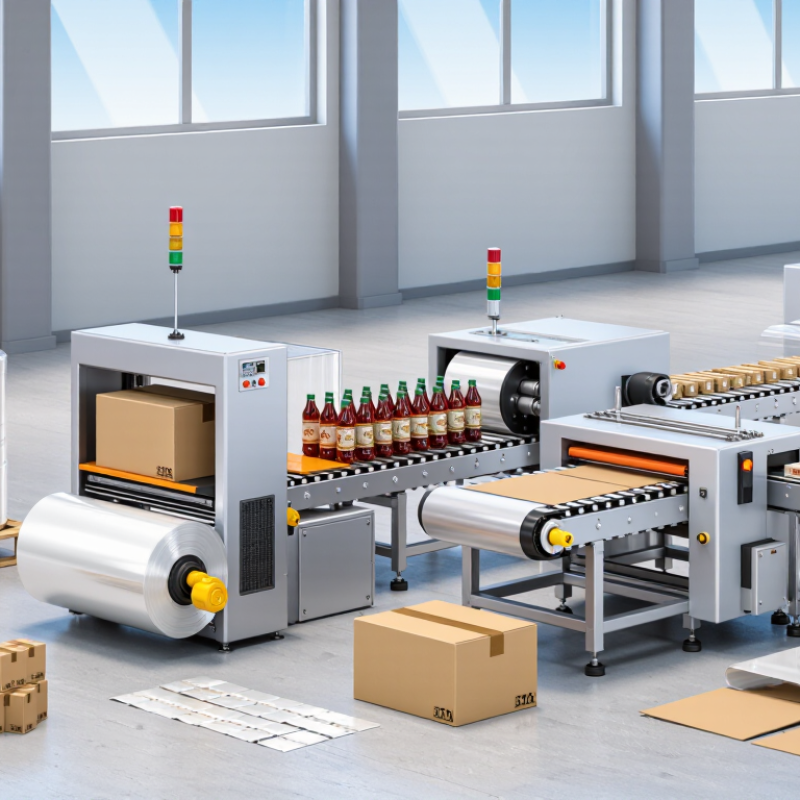
Film covering machines apply a protective or decorative film to a moving web or flat surface. In 2026, common configurations include roll-to-roll lines for continuous material and sheet-fed systems for separate panels. The right choice depends on substrate width, film thickness, production speed, and the finish required. There is no universal best machine.
A typical web-handling line includes an unwind stand, guide rollers, tension controls, an alignment sensor, a laminating nip, and a rewind or cutting station. The unwind feeds film steadily; tension controls help prevent slack, stretching, or wrinkles. Edge guides keep the film centered, while the nip presses it onto the substrate.
Small details matter. Dust on a roller can leave a visible mark, and uneven pressure may cause bubbles or weak bonding. Operators should check roller condition and track tension during setup, not just at startup.
A machine that runs smoothly with one film may behave differently with another. That part is easy to underestimate.
Keeping a short record of settings and defects helps teams make adjustments based on observed results, rather than relying on memory alone.
Stretch Wrappers: Film Selection and Load Containment Under ASTM D4649
Stretch wrappers commonly use a turntable, rotary arm, or rotating ring to apply film around a pallet. The right setup depends on load weight, dimensions, stability, and line speed. ASTM D4649 is a guide to selecting and using stretch wrap films; it is not a universal guarantee of load stability. Match film properties to the product and wrapping conditions. For example, sharp carton corners may need better puncture resistance, while uneven loads can require careful attention to film tension and overlap. A shiny, tight wrap can still hide weak containment.
Tips: Check the wrapped load, not just the machine settings. Look for loose film near the base, shifting cartons, and tears at exposed corners. More film is not always safer. Record the film type, wrap pattern, and load condition so trials can be compared. Small details matter.
Containment depends on how the film is applied as well as on its stated properties. Confirm that pre-stretch and tension suit the film and load, then evaluate the pallet after wrapping and during handling. ASTM D4649 can inform film selection, but actual performance should be verified for the intended load and distribution conditions. One detail is easy to miss: a stable pallet at the wrapper may behave differently after vibration or temperature changes. Test representative loads, and revise the setup when results are inconsistent.
Shrink Wrappers: Heat-Shrink Performance Tested Under ASTM D2732
Shrink wrappers rely on film that contracts predictably when heated. Chamber-style machines suit batch work, while sleeve wrappers and continuous shrink tunnels handle different package shapes and line speeds. Yet a fast tunnel cannot correct film with uneven shrink behavior.
ASTM D2732 measures the free shrink of plastic film or sheeting after immersion in a heated liquid. A technician cuts marked specimens, exposes them at a controlled temperature, then measures dimensional change in both machine and transverse directions. The results help compare film samples and identify directional differences. Small changes matter. A few percentage points may affect how tightly film gathers around a carton’s corners.
This test is useful, but limited. It does not reproduce a wrapper’s airflow, conveyor speed, seal quality, or the cooling around a real package. A film may perform well in the lab and still wrinkle beside a sharp edge. For a practical evaluation, pair D2732 results with line trials, recording tunnel temperature, belt speed, and visible defects. Keep the test conditions consistent. And question results that look unusually perfect. That caution is worth keeping.
Flow Wrappers and Form-Fill-Seal Machines: Sealing and Throughput Metrics
Flow wrappers carry products horizontally through a continuous film tube, then seal the package at the ends. They suit items such as snack bars, baked goods, and small hardware kits. Their throughput is usually tracked in finished packs per minute, but the headline rate can hide gaps caused by uneven product spacing or frequent film changes. That distinction matters. Seal quality depends on stable film tension, clean sealing jaws, and enough dwell time to bond the material without scorching it. Operators should inspect seal consistency and reject rates alongside speed.
Form-fill-seal machines create packages from a film roll, fill them, and seal them in a coordinated cycle. Vertical systems commonly handle free-flowing products, while horizontal systems package products that need careful positioning. Compare actual good packs per minute, not just cycles per minute; multiple lanes or cavities can change the result. A practical test should include startup, routine stops, and a full product changeover. A spreadsheet can make the faster machine look obvious, but real changeovers often complicate that answer. I would also record seal failures by location, since a wrinkle near the fin seal points to a different adjustment than a weak end seal.
Comparing Machine Types: Film Thickness Measurement Under ISO 4593
Film thickness control starts with choosing the right measurement method. ISO 4593:1993 describes mechanical scanning for plastic film and sheeting. A contact gauge presses a measuring foot against the film, producing readings at selected points. It is useful for repeatable offline checks. Small differences matter.
Inline optical gauges measure continuously without touching the web. They can reveal cross-web variation that a single bench reading may miss. However, surface gloss, vibration, and calibration can affect optical results. Compare the inline gauge with a mechanical reference method before relying on its readings. ISO 4593 defines a test method, not a universal acceptable thickness or product tolerance.
For credible records, log the gauge type, calibration status, test locations, and individual readings—not just the average. NIST Technical Note 1297, Guidelines for Evaluating and Expressing the Uncertainty of NIST Measurement Results, emphasizes documenting measurement uncertainty. That matters when two machines report slightly different values. A practical comparison records the mean, spread, and uncertainty for each method on the same film sample. Small setup errors can still distort the result. That deserves review.
What Are the Top Film Covering Machine Types in 2026? - Comparing Machine Types: Film Thickness Measurement Under ISO 4593
| Machine type |
Typical use |
Common film materials |
Indicative film thickness |
ISO 4593 measurement considerations |
| Stretch wrapping machine |
Secures pallet loads by stretching film around products. |
Linear low-density polyethylene (LLDPE) |
About 10–30 μm |
Measure representative film specimens mechanically. Record whether the sample is measured before or after stretching; the two conditions are not directly equivalent. |
| Shrink-wrapping machine |
Encloses products or multipacks in film that shrinks when heated. |
Polyolefin (POF), polyethylene (PE), or polyvinyl chloride (PVC) |
About 12–50 μm |
Test the unshrunk film as a specimen. Heat-shrunk film may have uneven geometry and is not a substitute for the original film sample. |
| Flow-wrap (horizontal form-fill-seal) machine |
Forms a film tube around individual products and seals the package. |
BOPP, CPP, PE, or multilayer flexible films |
About 15–50 μm |
Take specimens from the packaging web and avoid seal areas, folds, and damaged edges when they are not representative of the film being evaluated. |
| Shrink-sleeve applicator |
Places a tubular sleeve over a container before heat shrinking. |
PETG, PVC, or OPS sleeve film |
About 40–70 μm |
Measure flat, unshrunk material where possible. Keep specimen preparation and measurement locations consistent because sleeve films can vary across the web. |
| Overwrapping machine |
Folds film closely around cartons, trays, or individual products. |
BOPP, cellophane, or other flexible packaging films |
About 15–35 μm |
Use a flat film specimen rather than a folded package section; overlapping layers would produce a measurement that does not represent single-layer thickness. |
| Roll-to-roll laminating machine |
Combines film webs to create a multilayer flexible packaging structure. |
PET, BOPP, PE, PA, and other film layers |
About 12–50 μm per film layer |
ISO 4593 can be used to measure film specimens. A finished laminate’s total thickness includes multiple layers and adhesive, so it should not be reported as the thickness of one constituent film. |
Note: Thickness ranges are indicative examples of commonly encountered packaging films, not specifications set by ISO 4593. Actual ranges depend on material, construction, supplier, and application. ISO 4593 describes mechanical scanning for measuring the thickness of plastic film and sheeting; it does not prescribe machine types or film thickness targets. Follow the current standard and the relevant product specification for test conditions and reporting.